
General
Why Bartenders and Servers Are Essential for US Events


The words “just hire some servers” underestimate what is happening on the other side of a cocktail rail or over a buffet line. Professional bartenders and servers contain the guest experience, direct traffic flow, all while silently enforcing rules of compliance most planners do not even know exist until something goes wrong.
What cities like Los Angeles require are staffers from event staffing capable of doing an about-face from rooftop brand activation projects to a 400-guest gala in the same weekend. New York venues, particularly temporary ones, depend on experienced popup event staff who are familiar with A.B.C. regulations and fire-marshal capacity limits and know how to serve 600 guests in taut 90-minute shifts without gridlocks.
This article dissects why bartenders and servers are more than just people pouring drinks or carrying trays.
Discover insights that matter — dive into this Related Post and learn more today!
They Control the Guest Flow You Can’t See
Walk into any smoothly run event and you won’t notice the staff. That’s the point.
What trained servers do:
- Pre-position themselves near entry choke-points so guests don’t cluster at the bar
- Circulate passed appetizers in a grid pattern to distribute crowds evenly across the floor
- Signal kitchen or bar leads when inventory runs low, avoiding the dreaded “we’re out” announcement
In a 2023 report from the National Restaurant Association, 68 percent of event goers included quality of service as one of the top three drivers in their rating for total experience. That’s a metric that does matter when your event influences brand perception or client retention.
Poor service flow creates visible problems. Guests standing idle near the bar for eight minutes will leave early or post passive-aggressive Instagram stories. Professional servers prevent that lag before it becomes a PR problem.
Alcohol Service Carries Real Legal Weight
Most states treat alcohol service at private events the same way they regulate commercial bars. Liability doesn’t disappear because you rented a loft instead of a restaurant.
Key compliance areas bartenders manage:
- Age verification (including out-of-state IDs that look unfamiliar)
- Cut-off protocols for visibly intoxicated guests
- Documented service logs if an incident occurs post-event
California requires TIPS or ServSafe Alcohol certification for anyone serving at licensed events. New York’s Alcohol Beverage Control Law holds event hosts liable for over-service, even at private functions. Texas imposes similar dram shop liability, with civil penalties reaching six figures if a guest causes harm after leaving.
Hiring bartenders without current certifications isn’t just risky. It’s uninsurable. Most venue contracts now require proof of staff credentials before load-in begins.
They Adapt to Venue Constraints Planners Don’t Anticipate

Not every event happens in a ballroom with a loading dock and three-phase power. Popup activations, warehouse parties, and rooftop product launches throw logistical curveballs that trained staff handle reflexively.
Real scenarios servers navigate:
- Limited refrigeration means rotating ice every 45 minutes in July
- No running water requires pre-portioned cocktails and sealed hand-washing stations
- Single-access stairwells mean staggered plate drops so staff aren’t blocking exits
In Brooklyn, a 2024 fire-code investigation stopped an influencer shindig mid-service when untrained staff obstructed egress with bar equipment. The host was fined $12,000 and lost the venue deposit. Veteran employees remember that exit paths are the first thing to map when they’re setting up for an event, not when there’s an emergency.
Service Staff Double as Brand Ambassadors
Guests remember how they felt treated, not what the centerpieces were.
Bartenders and servers engage with guests more than any other person at events. That interaction shapes perception. A server who describes a signature cocktail’s elements or suggests the perfect pairing can transform an otherwise transactional encounter into something memorable.
74% of customers have a more positive opinion about a company or product after an event, according to the Event Marketing Institute. That figure jumps to 81% when workers demonstrate an understanding of the product or personalized service.
Training matters here. Scripts feel robotic. Servers who understand the event’s purpose and can speak naturally about the brand create organic moments that scripted talking points never achieve.
They Manage the Invisible Stuff That Breaks Events
The worst event failures happen in areas guests never see.
Behind-the-scenes tasks servers handle:
- Restocking glassware mid-service without visible trips to storage
- Coordinating with AV teams so trays don’t appear in photo backdrops
- Adjusting service speed when speeches run long or start late
In Chicago there is a corporate client running 20 minutes late to the start of their presentation. The caterers, not knowing about the change, showed up at a scheduled time with 300 entrees. By the time it was time for speeches, the food beyond cold and inedible. These veteran servers are watching as an event unfurls, and they can let kitchen crews know where there’s a delay, thus preventing disaster.
Budget Allocation That Actually Protects ROI
Cutting corners on service staff is the fastest way to tank an event’s return.
Consider the math: a $75,000 product launch with undertrained staff leads to slow service, long bar lines, and early exits. Half the target audience leaves before the product demo. The cost per engaged attendee doubles, and the conversion opportunity evaporates.
Allocating 18-22% of the event budget to professional staffing isn’t an expense. It’s risk mitigation. Trained servers prevent the service failures that turn a marketing investment into a cautionary tale.
Regional Nuances Call for Local Skills
What’s good in Miami doesn’t necessarily work in Seattle.
Events in Los Angeles often take place in the open, and managing service logistics is notoriously complicated with heat, sun glare and limited shade. Staff require plans for hydration and shade rotations to prevent any heat exhaustion halfway through the shift.
New York’s vertical venues have their freight elevators and tight service corridors, as well as noise ordinances. At a pop-up in SoHo, employees are wanted for setting up quietly before 10 a.m. and breaking down after 11 p.m. without disturbing the neighbors the practice was named
“Texas hospitality culture values tableside interaction and poke-around-the-salad plate-style service.” Rushing diners through courses or snatching away plates too soon reads as rude, not efficient.
A lack of local knowledge among people hired does not generate good vibes. Local teams know the unspoken customs that out-of-town crews overlook.
The Labor Market Isn’t What It Was Pre-2020
Staffing is still tight throughout the event industry.
It is still hard to find enough staff in the event industry. The hardest hit sector of it: jobs they believe are gone forever, from at bars and restaurantsto in society’s fault lines on cruise ships and corporate retreats. When the economy shut down, many experienced servers left the business and didn’t come back.
What this means for planners:
Lead times to secure quality staff have lengthened to 6-8 weeks not 2-3 Day-of replacements are more difficult Solutions need to offer back-up plans Pricing increased by approximate 15 – 20% under the demand that constitutes a competitive pricing on skilled labour
Agencies that maintain trained rosters offer stability. Last-minute Craigslist hires rarely end well.
Training Gaps Show Up in Guest Satisfaction Scores
The difference between adequate and excellent service isn’t subjective. It shows up in post-event data.
A 2023 study by the Event Leadership Institute monitored 1,200 corporate events and discovered that meetings with certified event professionals received a score that was 34% higher in participant satisfaction than those who used manpower.
Metrics where trained staff outperform:
- Wait time at bars and buffets (average reduction of 4.3 minutes)
- Accuracy of dietary accommodation requests (error rate below 2%)
- Guest complaints submitted post-event (72% reduction in incidents)
Those numbers add up when renewals, referrals or brand sentiment is the matter.
Stop Treating Service Staff as a Line Item
Servers and bartenders are not easily replaced with general labor. They oversee the guest experience, limit liability and handle behind-the-scenes logistics most planners don’t give a thought to until something goes wrong.
Events rise and fall on how well people are treated. That’s not hyperbole. It’s the truth of every sociable place where humans expect professionalism, safety and competence.
Lock In Staff Who Know What They’re Doing
Your next event deserves servers who understand the difference between acceptable and exceptional.
Partner with staffing teams who vet credentials, train for regional nuances, and maintain backup rosters. The alternative is hoping untested hires don’t become the reason your event trends for the wrong reasons.
Quality service isn’t a luxury. It’s the baseline for events that actually work.
Don’t miss out! Check our Featured Post for tips, trends, and strategies that work.


If you regularly check the current time in UK, you’ve probably noticed that Britain changes its clocks twice every year. This seasonal shift often creates confusion — not just for residents, but also for global businesses, traders, and travelers.
So why does the United Kingdom still adjust its clocks in an era of digital precision and 24/7 global connectivity?
Let’s break down the history, the controversy, and the real impact behind Britain’s clock changes.
Understanding the Current Time in UK: GMT vs BST
The current time in UK operates under two different time standards:
- Greenwich Mean Time (GMT) — UTC+0 (Winter)
- British Summer Time (BST) — UTC+1 (Summer)
GMT is based on the Prime Meridian located in Greenwich, London — the global reference point for time measurement.
Every year:
- Clocks move forward by 1 hour in late March (start of BST).
- Clocks move back by 1 hour in late October (return to GMT).
This system is known as Daylight Saving Time (DST).
But why continue this practice?
The Original Reason: Saving Daylight
The idea behind changing the current time in UK twice a year was simple:
Maximize daylight during working hours.
By shifting clocks forward in summer:
- Evenings get more daylight
- Energy usage was historically reduced
- Productivity was expected to increase
The policy was widely adopted during World War I and later formalized under the Summer Time Act.
At the time, it made economic sense.
But does it still?
The Growing Controversy Around Clock Changes
Today, critics argue that Britain’s twice-yearly clock change causes more problems than benefits.
1. Health Concerns
Studies suggest that changing the current time in UK disrupts:
- Sleep cycles
- Circadian rhythms
- Mental alertness
Some researchers even link DST transitions to:
- Increased heart attacks
- Higher accident rates
- Reduced workplace productivity
This has intensified debate within medical and scientific communities.
2. Economic Impact
Supporters claim BST benefits retail and tourism by extending evening daylight.
However, critics argue:
- Digital businesses no longer depend on daylight
- Energy savings are minimal in modern economies
- Global trading systems prefer consistency
For example, when the UK shifts to BST, time differences with:
- The United States
- Asia
- Middle Eastern markets
Temporarily change complicating scheduling.
Financial institutions like the London Stock Exchange must coordinate globally, and time adjustments create short-term confusion.
Scotland vs England: A Regional Divide
One of the most controversial aspects of the current time in UK debate involves geography.
Northern regions, especially Scotland, experience:
- Much later sunrises in winter
- Longer dark mornings if BST were permanent
If the UK adopted year-round BST (UTC+1):
- Winter mornings in northern Scotland could remain dark until nearly 10 AM.
This creates political friction between regions.
Southern England tends to benefit more from extended evening daylight, while northern areas face harsher winter mornings.
Should Britain Adopt Permanent GMT?
Another proposal suggests keeping GMT (UTC+0) all year.
Advantages:
- No biannual clock changes
- Stable international time difference
- Simplified scheduling
Disadvantages:
- Shorter summer evenings
- Potential retail revenue impact
Some argue that in a post-Brexit financial landscape, maintaining stable time alignment with global markets matters more than seasonal daylight adjustments.
The Global Perspective
Many countries have already reconsidered DST.
The European Union debated ending clock changes, though implementation has stalled. Meanwhile, some nations never adopted daylight saving at all.
This raises an important question:
If the world is moving toward time consistency, why does the current time in UK still shift twice annually?
Part of the answer lies in tradition, economic lobbying, and political caution.
Changing time law affects:
- Transport schedules
- Broadcasting rights
- Aviation coordination
- Financial systems
- IT infrastructure
It’s not as simple as flipping a switch.
Business and Market Implications
London remains one of the world’s major financial centers.
The overlap between:
- London trading hours
- New York markets
- Asian exchanges
Is strategically important.
When the UK shifts between GMT and BST, the overlap window changes temporarily.
For traders, even a one-hour shift affects:
- Forex liquidity
- Stock market correlations
- Global economic announcements
That’s why professionals monitor the current time in UK very closely during clock-change periods.
The Political Dimension
Clock changes may seem technical, but they are politically sensitive.
Any reform would require parliamentary approval and national consensus.
Lawmakers must balance:
- Public health research
- Business interests
- Regional concerns
- International coordination
Until a clear majority supports reform, Britain continues its twice-yearly adjustment.
Is It Time for Reform?
Supporters of abolishing DST argue:
- Modern economies operate digitally
- Energy savings are negligible
- Health risks outweigh benefits
Supporters of keeping the system argue:
- Longer summer evenings boost lifestyle and commerce
- Tourism benefits
- Cultural tradition matters
The debate remains unresolved.
And every March and October, the question resurfaces.
Stay Updated on the Current Time in UK
Whether you’re a trader, remote worker, traveler, or business owner, knowing the exact current time in UK is essential — especially during clock transition periods.
Even a one-hour difference can impact:
- International meetings
- Market openings
- Flight schedules
- Global project deadlines
For real-time and accurate updates, always check the live UK time at findtime.io to stay synchronized with global time zones.
Final Thoughts
The twice-yearly clock change in the United Kingdom may seem like a small adjustment, but its effects ripple across health, politics, business, and global markets.
As debates continue about whether Britain should adopt permanent GMT or BST, one thing remains clear:
The current time in UK is more than just a clock setting, it’s a policy decision with national and international consequences.
Until reform happens, Britain will continue to change its clocks and the controversy will continue ticking with it.

Introduction to killeen mesothelioma lawyer vimeo
Asbestos exposure is a serious issue that can lead to devastating health consequences, including mesothelioma. If you find yourself or a loved one facing this diagnosis in Killeen, it’s crucial to understand your rights and options. This is where the expertise of a killeen mesothelioma lawyer vimeo comes into play. With their knowledge and experience, they can guide you through the complexities of legal proceedings while ensuring your voice is heard.
But what exactly does a killeen mesothelioma lawyer vimeo do? How can they help secure compensation for those affected by asbestos exposure? In this blog post, we’ll explore these vital questions and outline steps to take after receiving such an overwhelming diagnosis. Understanding your legal rights is essential for fighting back against injustice and securing the future you deserve. Let’s dive deeper into how specialized legal representation can make all the difference during this challenging time.
The Role of a Killeen Mesothelioma Lawyer
A Killeen mesothelioma lawyer plays a crucial role in navigating the complexities of asbestos-related claims. Their expertise is invaluable, especially when dealing with the legal nuances that accompany such cases. They understand the intricacies of both state and federal laws regarding asbestos exposure.
These lawyers gather evidence from various sources, including medical records and employment histories. This thorough approach helps establish a solid case for clients seeking justice.
Additionally, they provide essential guidance on the types of compensation available—whether through settlements or court verdicts. With their experience, mesothelioma lawyers ensure that victims receive fair treatment throughout the entire process.
Moreover, having a dedicated professional by your side alleviates some stress during an incredibly challenging time. It empowers affected individuals to focus on healing while knowing their legal rights are being actively pursued.
Understanding Your Legal Rights
Understanding your legal rights after a mesothelioma diagnosis is crucial. Exposure to asbestos can lead to devastating health consequences, and knowing where you stand legally empowers you.
First, it’s essential to recognize that you may be eligible for compensation. Many employers are liable for failing to protect their workers from hazardous materials. This means they could be held accountable for damages related to medical expenses and lost wages.
Additionally, various laws govern personal injury claims tied to asbestos exposure. Statutes of limitations vary by state, affecting how long you have to file a claim.
You also have the right to seek information about your exposure sources. Investigating past work environments can uncover potential avenues for legal action.
Being informed about these rights provides clarity during an overwhelming time in your life. Each step taken toward understanding them brings you closer to justice and support.
Steps to Take After Being Diagnosed with Mesothelioma
Receiving a mesothelioma diagnosis can be overwhelming. It’s crucial to take proactive steps for your wellbeing and legal rights.
First, connect with your healthcare team. They will guide you through treatment options tailored to your specific needs. Raise any concerns you have and make sure every stage is clearly explained to you.
Next, document your medical history meticulously. Keep records of all treatments, medications, and appointments. This information will be vital for any future legal claims.
Think about contacting support networks or professional counselors. Speaking with people who have faced similar challenges can offer comfort and useful guidance.
Simultaneously, reach out to a qualified Killeen mesothelioma lawyer. They can help navigate the complex landscape of asbestos-related claims while ensuring that you understand your rights fully.
Stay informed about local resources available for patients like yourself; this knowledge empowers you in facing upcoming challenges head-on.
How a Mesothelioma Lawyer Can Help You Seek Compensation?
A killeen mesothelioma lawyer vimeo specializes in advocating for victims of asbestos exposure. Their expertise lies in navigating the complex legal landscape surrounding such cases.
These attorneys gather crucial evidence to build a compelling case. They know where to look for documentation, witnesses, and expert testimonies that bolster your claim. This thorough approach significantly enhances your chances of securing compensation.
Moreover, they understand the various avenues available for seeking damages—whether through settlements or lawsuits against responsible parties. A knowledgeable lawyer can also identify all possible sources of financial recovery, ensuring you don’t miss out on any potential claims.
Additionally, they’re skilled negotiators who will fight tirelessly on your behalf. They engage with insurance companies and opposing counsel to pursue fair compensation while you focus on your health and family during this challenging time.
The Importance of Choosing the Right Lawyer for Your Case
Choosing the right lawyer for your mesothelioma case is crucial. This decision can significantly impact your journey toward justice and compensation.
A specialized Killeen mesothelioma lawyer understands the intricacies of asbestos-related claims. They bring experience in navigating complex legal landscapes, ensuring that your rights are protected every step of the way.
Consider a lawyer’s track record. Success rates matter when selecting someone to handle such sensitive matters. Look for attorneys who have secured favorable outcomes for past clients.
Communication is also key. A good lawyer listens to your concerns and keeps you informed throughout the process. You should feel comfortable discussing personal details about your health and life circumstances with them.
Trustworthiness can’t be overlooked either. Choose someone who demonstrates integrity and genuine care for their clients’ well-being, not just their bottom line. The right match will make all the difference in an already challenging time.
Conclusion: Fighting for Justice and Securing Your Future
When facing a diagnosis of mesothelioma, it can feel overwhelming. The emotional and financial burdens are heavy, but you don’t have to shoulder them alone. Seeking the help of a Killeen mesothelioma lawyer is an essential step toward fighting for justice.
These legal professionals understand the intricacies of asbestos-related cases and know how to navigate the complexities of the law on your behalf. They work diligently to ensure that you receive compensation for medical expenses, lost wages, and pain and suffering caused by exposure to this harmful substance.
Choosing the right lawyer is paramount. You want someone experienced in handling mesothelioma cases specifically so they can advocate effectively for your rights. Their expertise will guide you through every stage—providing support while giving you peace of mind.
Every individual has a right to seek justice after being wronged due to negligence or unsafe practices involving asbestos exposure. By taking action now, you’re not just protecting yourself; you’re also standing up for others who may find themselves in similar situations down the line.
Your future deserves protection from past harm inflicted by irresponsible parties. A Killeen mesothelioma lawyer can be your ally in this fight—ensuring that accountability prevails while securing your financial stability moving forward.
General
How can the development cycle of medical device prototypes be shortened by 60% while controlling costs
Introduction
Biotech component and medical device development is challenged by the regulatory approval process, cost, and length of the product development cycle medical device prototyping. Issues are found in the late stages of product development, resulting in product delays and cost overruns. The basic challenge is the unvalidated stages of product development, starting from functionality and material compatibility.
In this article, the proposed solution is the strategic development of rapid prototypes using the correct materials and processes for complete product verification before large-scale production. The next sections will examine the five key factors for applicability of the approach in the medical domain.
How to Choose the Most Suitable Rapid Prototyping Technology for Medical Device Development?
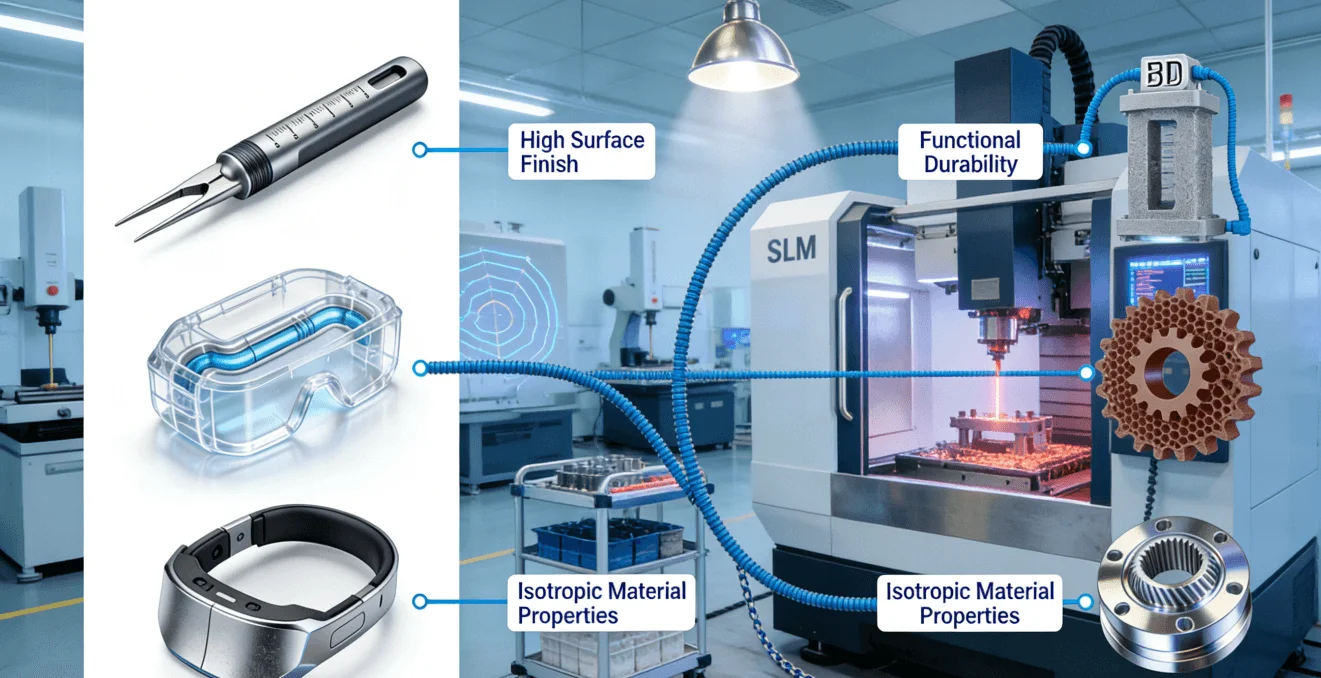
The selection of the proper types of rapid prototyping technology is the key first step in successful validation. It is mainly driven by the target purpose of the specific type of rapid prototype device, whether visualization, functional testing (e.g., fluid path integrity), fit and assembly, or initial biocompatibility testing.
For highly detailed and smooth surface aesthetic components as well as the creation of transparent components, Stereolithography or SLA would be the first choice. In scenarios where robust and complex-shaped functional components are needed without the necessity of having support structures, the Selective Laser Sintering or SLS process would be most beneficial. Yet, when the examination of metal surgical instruments or the validation under genuine material properties is required, the use of prototype CNC machining would be imperative due to its capacity to process isotropic materials medical device prototyping.
Agencies such as the American FDA consider the early stages of prototyping to be very important, deeming it an advantageous step in the process of reducing risks in both clinical and post-market performances. An effective rapid prototyping process entails understanding verification objectives and assigning suitable technology, material, and technique based on those objectives. This is very helpful in achieving success in both Medical Device Manufacturing and Biotechnology Component Production.
What are the Key Factors of Biocompatibility of Rapid Prototyping Materials?
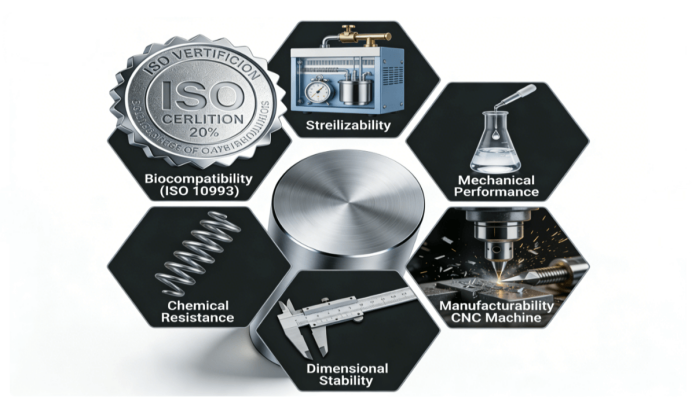
In medical terms, materials for rapid prototyping materials involve more than form and functionality, as they have a direct relation with patient safety and regulatory issues. Hence, knowing what these important factors involve can be critical for anyone involved in such projects.
The Three Pillars of Material Selection
The selection criteria for prototype materials for the use in the medical sector has to meet three fundamental standards:
- Biocompatibility:
The major gateway in this category is biocompatibility. Materials should be tested according to standards such as ISO 10993 to be non-cytotoxic, non-sensitizing, and non-irritating when they come into contact with the human body. Companies offering biomedical prototyping services should provide material choices compatible with biocompatibility standards of material testing. - Sterilizability:
The prototype needs to be able to withstand their intended method of sterilization, such as autoclaving, gamma radiation, and Ethylene Oxide, without degrading their properties and being representative of the end product. - Mechanical Performance:
The strength, toughness, and wear resistance of the material being used should be able to satisfy the requirements of simulated real-world usage, or else the functional testing would be rendered meaningless.
Phased Implementation of Material Usage
A strategic approach to material choice must be employed at different stages of prototyping:
- Early-Stage Conceptual Validation
The skills required during this stage involve understanding the material properties and performing assembly. Making rapid prototyping parts using general-purpose engineering plastics, such as ABS-like materials, is cost-effective and quick.
- Mid to Late Stage Functional and Compliance Validation
With an evolving design, it would be better to use materials which are closer to the end application. For example, a biopolymer like medical-grade Nylon (PA12) can be preferred for a Long-Lasting Enclosure, whereas a trial implant or a high-load instrument exam may require a titanium alloy (Ti6Al4V) and CNC Machining, or even a stainless steel material. A Rapid Prototyping Cost-Benefit Guide can help make the right decisions.
How Does an Efficient Rapid Prototyping Process Optimize the Medical Device Development Cycle?
An optimized and efficient rapid prototyping process is the engine that drives the compression of development schedules. It is “much more than the process of simply printing or machining a part” and is, in fact, a systematic process of engineering.
A optimized process would begin with professional 3D data preparation and Design for Manufacturability, where problems are analyzed and solved before they develop. This would be followed by accurate technology and material choice, depending on the objectives for the verification. In the Rapid Manufacturing process, whether it is done by 3D printing/CNC Machining Healthcare components, it would be important to have high-precision machines and attention to detail. Final processing, including cleaning and sterilization, and Quality Inspection would be the last hurdle before the prototypes are considered reliable.
For instance, developing prototypes for manufacturability analysis with CNC Machining Healthcare instrument prototypes can help detect potential issues such as thin walls, corners, and difficult-to-manufacture features that can save weeks and months of mold changes later on. This whole procedure also acts as excellent evidence for complying with ‘design verification’ criteria for quality management systems, such as the ISO 13485 standard. Associating with rapid prototyping services companies that have certifications such as ISO 9001, ISO 13485, and AS9100D can help guarantee all aspects related to the procedures above.
Why is Prototype CNC Machining Important in Surgical Instrument Production?
The process of Surgical Instrument Manufacturing requires high accuracy, robustness, and biocompatibility. In such a case, the involvement of prototype CNC machining is extremely crucial.
Its highest advantage is the ability to create functional rapid prototypes with exactly the same materials as the final product-for example, Stainless Steel 316L, Titanium alloys. This means that, other than being geometrically accurate, the prototype will be functionally representative, as it maintains the same isotropic mechanical properties and response to heat treatment, including microstructure, as the production part will have. It gives the possibility to engineers to perform the most realistic fatigue tests, torque tests, repeated actuation tests, and rigorous sterilization cycle validations with data having high confidence for final design decisions.
On the other hand, most metal 3D printing technologies may have their own limits such as suffering from interlayer bonding, higher surface roughness, and internal porosity in making these kinds of high-stress instrument prototypes. In such complicated instruments with very tiny geometries, for example, articulated joints or internal channels, 5-axis CNC machining can produce high precision monolithic fabrication to ensure assembly accuracy and functional integrity, which is critical to validating complex device designs.
How to Evaluate the Comprehensive Value of Rapid Prototyping Services Beyond Unit Price?
For Biotechnology Component Production, which has high value and involves strict regulations, it would be unwise to simply compare the cost per service for rapid prototyping services. A thorough evaluation for its overall value should instead extend to covering more extensive fields, such as its usefulness in enabling the attainment of the lowest possible cost and shortest possible time-to-market for the compliant product.
Key Activities Unrelated to the Quote
Firstly, the benefit of a specialty service provider is seen in its engineering support services, namely the capability to ensure in-depth DFM feedback in order to eradicate errors prior to occurrence. Second, the importance of having a quality control function is seen in the fact that a provider that maintains high levels of quality standards is one that maintains strong process controls.
A Systematic Evaluation Framework
There would be benefit in creating a multi-dimensional evaluation structure including consideration of the following factors:
- Technical Match: Does the supplier provide the complete range of necessary processes (additive, subtractive, molding processes)?
- Quality and Compliance Certifications: Does it have essential quality certifications, such as ISO 13485? Are cleanroom facilities available?
- Industry Experience and Case Studies: Are there successful projects in similar fields of medicine or biotech?
- Overall Delivery Capabilities: Does it deliver the whole process, right from communications and design help to post-processing and documentation, smoothly and effectively?
Realizing Lowest Total Cost
For projects which have stringent technical requirements, it is important to select an appropriate partner who can end-to-end meet requirements. An appropriate professional service in this aspect is the Medical Device Rapid prototyping service which can be best exemplified through JS Precision. It is evident that the actual worth is established when it reduces the number of cycles with an end objective of minimizing project cost and time to market.
Conclusion
In conclusion, a successful medical devices or biotechnology solution is significantly reliant on an early adoption of a rapid prototyping solution with a structured, scientific approach. Each phase of a project, whether technology or material selection, significantly influences a solution’s effectiveness and speed to market, with authorities viewing rapid prototyping approaches as a necessary pathway rather than an optional tool, especially from an innovation viewpoint from key players in this particular sector or market.
In case you are experiencing issues with creating prototypes for healthcare and biotech-related projects, and you are looking for expert help that is fast, accurate, and compliant with standards, you are welcome to get in touch with our team for a free consultation.
Author Bio
The article has been contributed by a professional who has over a decade of experience in the field of precision manufacturing, specifically in the domain of offering unique and different rapid prototyping and customized manufacturing services to the medical and biotech sectors.
FAQs
Q1: What is the typical lead time for rapid prototype manufacturing?
A1: The lead times vary significantly based on technology and complexity. From 24-48 hours for simple parts-the SLA is a good example-ranges to 3-7 working days for complex functional metal prototypes via CNC machining. Vacuum casting will take 5-10 days for small batches.
Q2: What specific standards do the rapid prototypes of the medical device have to adhere to?
A2: The main ones would involve standards for biocompatibility, such as ISO 10993; sterilizability may also be necessary, and a manufacturing cleanroom. Prototype materials and production processes should allow for final regulatory submission requirements.
Q3: How does one choose between 3D printing and CNC machining for medical prototypes?
A3: 3D printing works for complex geometries and one-time-use surgical guides. CNC machining is preferred when the prototype requires the exact mechanical properties of the final metal material, especially for surgical instruments.
Q4: How is the confidentiality of medical prototype design data protected?
A4: Suppliers should be selected on the basis of their stringent data security measures, usually implemented through Non-Disclosure Agreements (NDAs), secure file transfer protocols, or data management practices.
Q5: Can rapid prototypes be directly used in clinical tests?
A5: This is material-, process-, and regulatory-dependent medical device prototyping, although there are approved materials and processes for additive manufacturing that have been qualified for the actual implant, although this is not the case for the prototypes.

Budget Hacks CWBiancaMarket: Transform Your Shopping Routine Into Major Savings

How To Pick The Right Hybrid Gummies For You

www .defstartuporg: From Concept to Launch – Complete Roadmap for Startups

How to Prevent Common Issues After Door Installation

What Makes Sterile Gloves Different from Regular Gloves in Cleanrooms
-

 General6 months ago
Felixing: A Philosophy of Turning Simple Ideas into Wonders
-
 Health5 months ago
Lufanest: Effective Local Anesthesia with Fewer Risks
-

 General6 months ago
bardoek: The Artistic Heritage Inspiring Modern Creative Trends
-

 Entertainment5 months ago
هنتاوي.com: Your Gateway to Arabic Anime Content
-

 General5 months ago
Discover Anonib AZN: An Anonymous Asian Forum
-

 Fashion7 months ago
fashionisk .com – Your Ultimate Guide to Trendy, Smart Fashion
-

 Lifestyle7 months ago
Mariano Iduba: A Visionary Leader in Global Digital Growth
-

 Fashion7 months ago
Casîo: Explore Legacy, G-SHOCK Watches, Keyboards, and More