
Business
What Makes a Great Outdoor Cushion Store? 7 Things to Look For Before You Buy


Outdoor cushions seem simple until you have to replace them. That is usually when the frustration starts. Measurements are slightly off. The color on your screen looks nothing like what arrives. The “outdoor” fabric fades by mid-summer. Choosing the right retailer is less about price and more about knowing who actually understands patio furniture. A reliable outdoor cushion store should make the process feel precise, not guesswork.
Fit Is Everything
Outdoor furniture is rarely standard. One manufacturer’s deep seating chair is another brand’s oversized club chair. Frames vary by fractions of an inch, and those fractions matter.
A serious outdoor cushion store does not rely on vague size categories like “large” or “standard.” It supports exact measurements. The difference between a cushion that fits cleanly inside a frame and one that floats awkwardly on top is usually half an inch. We have seen customers try to force big-box cushions into custom furniture. It never looks right.
At The Replacement Cushions, we insist on accurate measurements because fit determines everything else. The lines sit straighter. The seams last longer. The entire piece looks intentional instead of temporary.
Fabric That Actually Belongs Outdoors
Not all “outdoor” fabrics are equal. Some are merely water-resistant. Others are engineered for prolonged UV exposure, humidity, and temperature swings.
A dependable outdoor cushion store will offer solution-dyed acrylics and other performance fabrics that resist fading and mildew. These are materials developed specifically for exterior use, not repurposed indoor upholstery.
Color selection matters too, but durability comes first. We have watched dark navy cushions turn chalky gray in one season when the fabric was wrong. It is avoidable. The right textile holds its color and texture year after year.
The Foam Inside Tells the Real Story
Comfort does not come from fabric alone. It comes from what sits underneath it.
Inferior foam compresses quickly, especially in high-traffic seating like sectionals or dining chairs. Once the structure collapses, the cushion never quite recovers. A knowledgeable outdoor cushion store should be clear about foam density and drainage.
At The Replacement Cushions, we use supportive foam cores designed for outdoor airflow. They hold their shape while allowing moisture to escape. That balance matters. Cushions should feel substantial, not spongy, and they should not trap water after a summer storm.
Made-to-Order Craftsmanship
Mass inventory often means compromise. Limited fabrics. Limited sizes. Limited details.
A well-run outdoor cushion store builds to order. That allows seams to align properly, patterns to sit straight, and thickness to remain consistent. You can see the difference when the piping is clean, and the edges do not warp after a few weeks of use.
There is a certain satisfaction in knowing your cushions were made specifically for your furniture rather than pulled from a warehouse shelf.
Samples Before Commitment
Screens lie. Lighting alters tone. What appears beige online can read yellow in natural sunlight.
Any thoughtful outdoor cushion store should provide fabric samples. It sounds simple, but it prevents costly mistakes. Lay the swatch against your patio stone. See it next to your umbrella. Watch how it changes in afternoon light.
We encourage sampling because it gives you control. Choosing outdoor textiles should feel deliberate, not rushed.
Transparency and Warranty
Outdoor cushions take abuse. Sun. Rain. Children are climbing across them. Pets claiming them as territory.
A trustworthy outdoor cushion store stands behind its workmanship. Clear warranty terms matter. So does responsive customer support. Questions about measurement or fabric should be answered by someone who understands construction, not just order numbers.
We built The Replacement Cushions around that principle. Guidance should feel informed and practical, not scripted.
Variety Beyond the Basics
Outdoor seating is not limited to square chairs and rectangular benches. There are curved sectionals, chaises, ottomans, and specialty pieces that require tailored construction.
A capable outdoor cushion store handles that range without hesitation. We regularly produce deep seating sets, chaise lounges, and custom corner units. And yes, we craft pieces for benches swings and glider cushions as well. Outdoor spaces are personal. The cushions should reflect that.
Why the Store You Choose Matters?
Patio furniture is an investment. Replacing it entirely because the cushions failed is unnecessary when the frames are still solid. The right cushions extend the life of your furniture and restore its presence.
When customers come to us frustrated after a disappointing purchase elsewhere, the pattern is usually the same: limited sizing, unclear materials, and weak construction. Those shortcuts reveal themselves quickly outdoors.
Selecting the right outdoor cushion store means choosing expertise over convenience.
Ready to Refresh Your Patio?
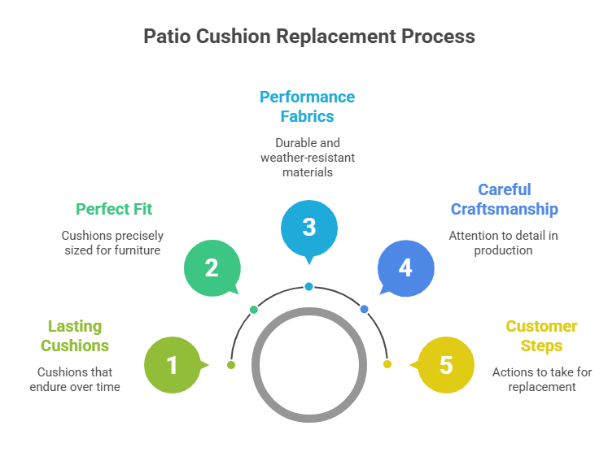
If your cushions are flattened, faded, or simply tired, it may be time for a proper replacement. At The Replacement Cushions, we combine accurate sizing, performance fabrics, and careful craftsmanship to produce cushions that belong on your furniture, not just near it.
Visit the website and explore your options. Order fabric samples. Measure carefully. Then let us build something that fits the way it should and lasts the way it should.
FAQs
How precise do my measurements need to be?
As precisely as possible. Measure width, depth, and thickness using a firm tape measure. Even small discrepancies affect fit.
What fabric performs best in direct sunlight?
Solution-dyed acrylic fabrics are widely regarded as the most reliable for resisting fading and mildew in full sun conditions.
How long should quality outdoor cushions last?
With proper materials and care, several years. Climate and usage will influence lifespan.
Do I need to bring cushions inside during the rain?
Performance fabrics resist moisture, but allowing cushions to dry fully after heavy rain extends their life.
Can specialty shapes be custom-made?
Yes. Custom corner pieces, chaise cushions, and other non-standard designs can be tailored to your exact specifications.


Introduction to QLCredit and its Mission
In a world where traditional banking systems often fall short, QLCredit emerges as a beacon of innovation in digital finance. With the rapid rise of decentralized finance (DeFi) and advancements in artificial intelligence (AI), QLCredit is on a mission to transform how we think about financial services. Imagine accessing loans, managing assets, and making transactions seamlessly without reliance on conventional institutions. That vision is becoming reality with QLCredit, where cutting-edge technology meets user-centric solutions. Join us as we explore the revolutionary impact of this platform and how it’s paving the way for a new era in digital finance.
The Emergence of Decentralized Finance (DeFi)
Decentralized Finance, or DeFi, has taken the financial world by storm. It offers an alternative to traditional banking systems that often rely on intermediaries. This shift empowers users with greater control over their assets.
At its core, DeFi leverages blockchain technology. This enables peer-to-peer transactions without the need for banks or brokers. Users can lend, borrow, and trade cryptocurrencies directly from their wallets.
The rise of smart contracts further fuels this ecosystem. These self-executing contracts ensure transparency and security while reducing operational costs. As a result, financial services become more accessible to everyone.
DeFi is also attracting global attention as it democratizes finance. Individuals in underbanked regions are finding new opportunities through decentralized platforms. The landscape is evolving quickly, with innovations emerging daily that challenge conventional methods of managing money.
The Role of Artificial Intelligence (AI) in QLCredit
Advanced automation serves as a cornerstone for improving the operational performance of QLCredit. By leveraging advanced algorithms, it analyzes vast amounts of financial data quickly and accurately. This results in smarter decision-making processes.
The integration of AI enables personalized financial solutions tailored to individual user needs. Smart predictive algorithms evaluate borrower risk far quicker than legacy systems, opening up financing options to a wider demographic.
Moreover, AI enhances risk assessment by identifying patterns that may not be visible through conventional analysis. This proactive approach minimizes defaults and fosters trust among users.
Real-time analytics powered by AI offer immediate insights into market trends and consumer behavior. Consequently, QLCredit can adapt its services dynamically, staying ahead in the fast-paced digital finance landscape. Through these innovations, AI is fundamentally transforming how users interact with their finances on the platform.
How QLCredit is Revolutionizing Digital Finance?
QLCredit is transforming the landscape of digital finance by seamlessly merging decentralized finance with cutting-edge technology. Its innovative platform eliminates traditional barriers, enabling users to access financial services without the constraints imposed by conventional banking systems.
By leveraging blockchain technology, QLCredit ensures transparency and security for every transaction. Users can track their financial activities in real time, fostering trust among participants.
Moreover, QLCredit employs advanced algorithms that utilize artificial intelligence to analyze market trends. This capability allows users to make informed decisions tailored to their unique financial situations.
The user experience is enhanced through smart contracts that automate processes such as lending and borrowing. These efficiencies reduce costs and streamline operations, making it easier for individuals and businesses alike to navigate the complex world of finance.
As a result, QLCredit not only empowers users but also sets new standards within the industry.
Benefits of Using QLCredit for Financial Services
QLCredit offers a myriad of benefits that set it apart in the financial services landscape. Its decentralized nature ensures greater transparency, allowing users to track transactions seamlessly. This builds trust among participants.
Security is another cornerstone of QLCredit. Utilizing blockchain technology, it protects sensitive data from breaches and fraud, safeguarding user assets effectively.
Moreover, accessibility is a key advantage. Users can engage with financial services without geographical limitations or traditional banking hurdles. This opens doors for many who previously faced barriers to entry.
Cost efficiency also plays a significant role. By eliminating intermediaries, QLCredit reduces transaction fees substantially while enhancing speed and reliability in service delivery.
Its integration of AI allows for personalized experiences tailored to individual needs. Customers benefit from smarter insights that drive informed decisions in their financial journeys.
Case Studies: Real-Life Examples of QLCredit’s Impact
QLCredit has made significant strides in the financial landscape, with real-life case studies showcasing its impact. One notable example involves a small business owner struggling to secure traditional financing. By utilizing QLCredit’s platform, they accessed instant liquidity through decentralized loans. This not only saved time but also reduced overall borrowing costs.
Another compelling instance features an individual seeking better investment opportunities. With AI-driven insights from QLCredit, they tailored their portfolio effectively and achieved impressive returns within months.
In rural areas, QLCredit facilitated access to credit for farmers who previously had limited options. They used blockchain technology to verify identities and streamline loan processes efficiently.
These examples illustrate how QLCredit is changing lives by providing accessible finance solutions that empower individuals and businesses alike. The results are tangible—more growth, more opportunity, and ultimately, more financial freedom for users around the globe.
Future Plans and Expansion for QLCredit
QLCredit is poised for significant growth as it looks to expand its offerings and reach. With a focus on integrating more advanced AI technologies, the platform aims to enhance user experience and provide even smarter financial solutions.
The team is exploring partnerships with various fintech companies to broaden its service portfolio. This collaboration could lead to innovative products that cater specifically to underserved markets.
Additionally, QLCredit plans to introduce educational initiatives aimed at empowering users with knowledge about DeFi and AI in finance. By fostering understanding, they hope to drive greater adoption of their services.
Global expansion is also on the horizon. Entering new markets will allow QLCredit to bring its revolutionary approach to a wider audience, breaking down traditional barriers in digital finance. Each step taken reflects their commitment not just towards technology but toward building an inclusive financial future for all.
Conclusion
QLCredit stands at the forefront of a financial revolution, seamlessly integrating decentralized finance and artificial intelligence. This innovative approach not only enhances user experience but also provides security, efficiency, and accessibility in digital transactions. As more individuals and businesses turn to QLCredit for their financial needs, the impact is poised to grow.
The future holds exciting possibilities for QLCredit as it continues to expand its services. By embracing technology and fostering transparency within the financial system, it sets a new standard for what digital finance can achieve. The journey has just begun; with each step forward, QLCredit redefines how we perceive money management in an increasingly digital world.
Embracing change is essential in this fast-evolving landscape. As strategies targeting wider availability and enhanced customer interaction loom ahead, it remains a mystery how far this journey might go. The potential of QLCredit offers much more than mere convenience—it heralds a new era of empowerment through finance that could reshape lives globally.

Introduction to and diligence
Diligence is often seen as a cornerstone of success, both in our personal lives and within the business landscape. But what does it truly mean to embody diligence? At its core, it’s about commitment, persistence, and dedication toward achieving goals. This concept has deep moral roots that echo through history and continue to resonate today.
As we navigate an ever-evolving workplace filled with challenges and opportunities, understanding the relevance of diligence becomes crucial. It shapes not only individual careers but also influences organizational culture. Whether you’re climbing the corporate ladder or nurturing your own venture, embracing diligence can be transformative.
Let’s explore how this timeless principle translates into modern work environments and why it’s essential for growth in every facet of life.
The Historical and Moral Significance of Diligence
Diligence has deep historical roots, dating back to ancient civilizations. It was often viewed as a virtue essential for personal growth and societal progress. In many cultures, hard work was closely linked to moral character.
Philosophers like Aristotle emphasized the importance of diligence in achieving one’s potential. They believed that consistent effort is fundamental to excellence and virtuous living.
Religious texts also highlight this value, urging followers to be industrious and committed in their endeavors. The notion of stewardship resonates with the idea that diligent work respects both oneself and the community.
Over centuries, societies have celebrated figures known for their diligence—individuals who labored tirelessly for innovation or social change. This legacy continues to shape our understanding of success today.
As we navigate modern challenges, recalling these historical lessons can reinforce our commitment to diligence as a core principle guiding us toward achievement and fulfillment.
How Diligence Translates to Success in the Modern Workplace?
Diligence serves as the backbone of achievement in today’s fast-paced workplace. It fosters a strong work ethic, enabling individuals to stay focused on tasks and meet deadlines consistently.
Employees who embody diligence often surpass their peers. Their commitment leads to higher quality outcomes and greater reliability. This creates trust within teams and enhances collaboration.
Moreover, diligence encourages continuous learning. Those who apply themselves diligently seek opportunities for improvement, adapting to new challenges with enthusiasm.
In an era where innovation is key, diligent employees contribute significantly by driving projects forward efficiently. They bring ideas to life through persistence and attention to detail.
Organizations that prioritize diligence cultivate a culture of accountability. This not only boosts morale but also attracts talent keen on growth and excellence in their roles.
Examples of Companies Emphasizing Diligence in their Culture
Many companies today recognize the power of diligence in shaping their culture. One prime example is Amazon. The tech giant emphasizes high standards and hard work, pushing employees to continuously improve and innovate.
Another notable mention is Google. Their commitment to excellence encourages team members to focus on diligent research and development, fostering an environment where thoroughness leads to groundbreaking ideas.
Zappos stands out for its customer service approach rooted in a diligent work ethic. Employees are trained to go above and beyond, ensuring every customer receives exceptional care.
Toyota exemplifies diligence through its lean manufacturing principles. By emphasizing continuous improvement and efficiency, the company showcases how dedication can drive success within the automotive industry.
These organizations demonstrate that when diligence becomes part of the corporate fabric, remarkable achievements follow naturally.
Tips for Cultivating Diligence in the Workplace
Encouraging diligence in the workplace starts with setting clear expectations. When employees understand their roles and responsibilities, they are more likely to engage in focused effort.
Provide regular feedback. Constructive input helps team members recognize areas for improvement and reinforces positive behaviors.
Create a culture of accountability. Encourage everyone to take ownership of their tasks, which fosters personal investment in outcomes.
Incorporate goal-setting sessions into your routine. Establishing both short-term and long-term objectives gives everyone something concrete to strive toward.
Promote collaboration among team members. Working together not only enhances productivity but also cultivates an environment where diligence is valued and shared.
Consider offering training programs that emphasize skills related to time management and organization. These tools empower individuals to work efficiently while maintaining high standards of quality.
Balancing Diligence with Work-Life Balance
Balancing diligence with work-life harmony is crucial in today’s fast-paced environment. While dedication to tasks can drive success, it shouldn’t come at the expense of personal well-being.
Setting boundaries is essential. Encourage employees to disconnect after hours. This fosters a culture where rest and recovery are valued alongside hard work.
Promoting flexibility helps too. Allowing remote options or adjustable schedules empowers individuals to manage their time effectively. When people feel in control, their productivity often soars.
Encourage breaks throughout the day as well. Short pauses for relaxation can rejuvenate focus and creativity, leading to higher-quality output when they return to tasks.
Supportive leadership plays a pivotal role here. Leaders should model healthy habits themselves, demonstrating that diligence’s doesn’t mean neglecting life outside of work responsibilities.
Conclusion: Why Diligence is Essential for Personal and Professional Growth?
Diligence plays a crucial role in both personal and professional arenas. It fosters a sense of responsibility, encouraging individuals to put forth their best effort consistently. This unwavering commitment not only aids in achieving individual goals but also contributes to the collective success of teams and organizations.
Embracing diligence cultivates resilience. When challenges arise, those who practice diligence are often better equipped to navigate obstacles with persistence and determination. This tenacity is essential for fostering innovation and driving progress within any workplace.
Moreover, diligent practices can lead to improved relationships at work. Colleagues appreciate reliability; it builds trust among team members when everyone pulls their weight diligently. As a result, collaboration flourishes, creating an environment where ideas can thrive.
Integrating diligence into daily routines promotes personal growth as well. It encourages individuals to set high standards for themselves while instilling discipline over time. This disciplined approach leads not only to career advancement but also enhances overall life satisfaction.
In an era where distractions abound and quick fixes tempt us at every turn, prioritizing diligence becomes even more vital for sustained success—both personally and professionally. Embrace this foundational trait; it holds the potential for transformative change in your career trajectory and beyond.
Business
Costco Rival Launches Megastore: A Hidden Culinary Diamond Emerges in LA’s Industrial Jungle

Introduction to the new costco rival launches megastore and its location in LA’s industrial jungle
Nestled within the bustling expanse of Los Angeles’ industrial landscape, a new megastore has emerged, stirring excitement among bargain hunters and food enthusiasts alike. This isn’t just any store; it’s a bold contender in the wholesale arena that many are dubbing as Costco’s fiercest rival. With its grand opening creating quite the buzz, shoppers are eager to discover what secrets lie within this culinary diamond hidden amidst concrete and steel. As we explore what makes this megastore stand out from the crowd, you’ll want to grab your shopping list—because this place is redefining how Angelenos shop for groceries and household essentials.
Why it’s considered a rival to Costco?
The new megastore has quickly garnered attention as a strong competitor to Costco. Its vast selection rivals the wholesale giant, featuring everything from groceries to electronics.
Pricing is another crucial factor. Shoppers have reported significant savings on bulk items compared to what they find at Costco. This competitive pricing strategy is appealing for families and small businesses alike.
Membership perks also play a role in this rivalry. The store offers exclusive deals that can rival or even surpass those available through Costco’s membership program, adding extra value for consumers.
Moreover, the shopping experience is designed with modern convenience in mind. A more open layout allows customers to navigate effortlessly, making it easier to find products without feeling overwhelmed.
Together these elements create an enticing alternative for shoppers looking beyond traditional options in their quest for quality and affordability.
Location and layout of the store
Nestled in the heart of Los Angeles’ industrial district, this megastore is strategically positioned for easy access. The location thrives amid warehouses and bustling suppliers. It’s a surprising oasis among the concrete.
As you step inside, you’re greeted by an expansive layout that feels both inviting and efficient. Wide aisles allow for seamless navigation, ensuring shoppers can swiftly find what they need without feeling cramped.
The store’s design incorporates high ceilings and ample natural light, creating a vibrant atmosphere. Distinct zones are dedicated to groceries, electronics, home goods, and even gourmet food selections.
Each section flows logically into the next. This thoughtful arrangement not only enhances shopping experience but also encourages exploration of all offerings available under one roof—making each visit feel fresh and exciting!
Unique features and offerings of the megastore
This fresh wholesale giant is full of unexpected features that completely distinguish it from rival chains. Imagine walking into a vast space filled with gourmet foods sourced globally. You’ll find everything from artisanal cheeses to exotic spices that aren’t available in typical wholesale outlets.
One standout feature is the interactive cooking stations scattered throughout the store. Customers can sample dishes prepared by skilled chefs and even participate in mini cooking classes. This adds an experiential element to grocery shopping, making it far more engaging.
Additionally, you’ll discover a dedicated section for local producers. Fresh produce and handmade goods support community farmers and artisans, creating a sense of connection that’s often missing in larger chains.
Another surprise? A rooftop garden where shoppers can relax or grab fresh air while enjoying light bites made on-site. It’s not just about buying; it’s about experiencing food culture at its best within these walls.
The impact on local businesses and community
The arrival of this new megastore is already shaking up the local business landscape. Small grocery stores and markets nearby are feeling the pressure. Customers now have a one-stop shop that offers bulk products at competitive prices.
However, some view it as an opportunity for collaboration rather than competition. Local vendors are finding ways to partner with the megastore, showcasing regional produce and unique items that stand out against mass-produced goods.
Community events hosted by the store aim to strengthen ties with residents. Workshops on cooking and nutrition bring people together while promoting healthier lifestyles.
This shift in dynamics could redefine how businesses operate in LA’s industrial areas. The presence of a major player encourages smaller shops to innovate and adapt, leading to a more diverse shopping experience for everyone involved.
Customer reviews and experiences
Customer feedback about the new megastore has been overwhelmingly positive. Shoppers rave about the spacious aisles and well-organized layout, making their shopping experience effortless.
Many patrons highlight the impressive selection of products. From gourmet snacks to organic produce, there’s something for everyone. The unique culinary offerings have caught attention, prompting many to return frequently.
Pricing is another topic generating buzz; customers appreciate competitive prices that rival those at Costco without sacrificing quality.
Service also shines through in reviews. Employees are noted for being friendly and helpful, adding a personal touch that enhances the overall atmosphere.
Some first-timers reported feeling like they stumbled upon a hidden gem amidst LA’s industrial backdrop. This excitement seems contagious as friends share experiences and encourage others to explore this new hub of culinary delights.
Comparison with other major wholesale stores in Los Angeles
When it comes to wholesale shopping in Los Angeles, competition is fierce. Costco has long been the giant in this arena. Its loyal members appreciate bulk savings and a vast selection of products.
However, the new megastore offers a fresh alternative. With a focus on local and organic goods, it taps into consumer trends that resonate deeply with health-conscious shoppers.
Sam’s Club also plays a significant role in this market. While they provide competitive pricing, their emphasis on membership perks varies from store to store.
The newly launched megastore distinguishes itself with unique offerings like artisan cheeses and gourmet meats not typically found at its rivals. This approach attracts food enthusiasts eager for quality over quantity.
Shoppers seeking variety may find that each wholesaler caters to different tastes and needs, making LA’s wholesale scene diverse and exciting for consumers looking for something special.
Conclusion
The launch of this megastore marks a significant shift in the landscape of wholesale shopping in Los Angeles. Positioned strategically within the industrial hub, it stands as a formidable competitor to Costco, offering unique products and services that cater to diverse customer needs.
Shoppers are discovering an array of exclusive items, fresh produce at competitive prices, and gourmet selections rarely found in typical warehouse stores. The layout is designed for ease and efficiency, making browsing a delightful experience rather than a chore.
Local businesses feel both excitement and trepidation as this new player enters the market. While some may fear increased competition, others see opportunities for collaboration or niche offerings that set them apart from mass retail.
Customer reviews highlight the store’s appeal—from its cleanliness to exceptional product variety. Many express enthusiasm about finding culinary gems that elevate their shopping experience.
As we compare this megastore with other major wholesalers like Sam’s Club or Smart & Final in LA, it’s clear that each has carved out its own identity while vying for shopper loyalty.
This innovative addition to LA’s retail scene invites everyone to explore what could easily become their new go-to destination for all things culinary and more.

The Importance Of Transitional Care From Baby Teeth To Permanent Smiles

Otelia Cox: Inside the Private Life and Enduring Love Story of a Hollywood Cornerstone

Oronsuuts Demystified: How Mongolia’s Modern Housing System Simplifies Urban Living

QLCredit: Redefining Digital Finance Through DeFi and AI Innovation

And Diligence: From Moral Roots to Business Relevance in the Modern Workplace
-

 General2 months ago
What Is Felixing? The Truth Behind a Junk Keyword
-

 Health9 months ago
Lufanest: Effective Local Anesthesia with Fewer Risks
-

 Entertainment2 months ago
هنتاوي.com: Your Gateway to Arabic Anime Content
-

 General10 months ago
bardoek: The Artistic Heritage Inspiring Modern Creative Trends
-

 General9 months ago
Discover Anonib AZN: An Anonymous Asian Forum
-

 Fashion2 months ago
Fashionisk .com Explained: A Closer Look Before You Click
-

 Technology10 months ago
Aponeyrvsh: A Modern Framework for Innovation and Resource Use
-

 Lifestyle10 months ago
Mariano Iduba: A Visionary Leader in Global Digital Growth