
Health
Top 7 Telehealth API Integrations Every Healthcare Developer Should Implement


Telehealth products live or die on call quality, security, and how easily patients can join a visit. The right API integrations help developers deliver that without bloated builds or fragile workflows.
This article reviews seven options that teams can plug into modern virtual care apps. It starts with iotum, a HIPAA-compliant video and voice API designed for embedded visits. Then it covers 100ms.live, Galene, Brightcove, JW Player, Dolby.io (Voxeet), and Voximplant.
You will see how each handles live consults, recording, analytics, bandwidth shifts, and deployment needs. The aim is to highlight practical fits for real care settings.
iotum
iotum provides a telehealth video and voice conferencing API that healthcare teams can embed into their own apps, portals, or EMR systems. The iotum solution is HIPAA compliant and built for remote consultations that feel close to an in-person visit. Patients join through a browser with no downloads, using desktop or mobile devices.
Clinicians can run secure sessions with tools like waiting rooms, chat, screen sharing, and file exchange. Scheduling support and automated reminders help keep appointments on track. Recording and analytics add visibility into visit quality and patient engagement, which is useful for improving ongoing care.
iotum Key Features
- HIPAA-compliant video and voice API: Secure telehealth sessions that can be added to existing healthcare workflows with minimal build time.
- Download-free patient access: Visits run in the browser, plus mobile apps are available for e-visits when needed.
- Remote consultation toolkit: Video, text chat, screen and document sharing, live annotation, and recording support common clinical steps
iotum Pros
iotum is designed for organizations that want telehealth inside their own digital environment, not in a separate third-party tool. The API and SDK approach lets teams keep their branding and user flow while adding secure audio, video, and messaging. Browser-based access removes friction for patients who may struggle with downloads or logins
iotum Best Use Case
The iotum solution fits healthcare groups that deliver remote visits at scale and need control over workflow, security, and patient experience. It is a strong match for hospitals, clinics, and telehealth programs that want embedded virtual consults for follow-ups, specialist care, or access-limited patients.
EMR and patient-portal vendors can also use it to add telehealth without rebuilding their core product. Features like scheduling, reminders, and post-visit analytics suit teams that track outcomes and consistency across providers. It also supports training and case review through recorded sessions and shared clinical materials.
100ms.live
100ms.live helps healthcare providers start video conferencing in just two days with its cloud-based platform and prebuilt components. This telehealth video conferencing API prioritizes call quality and success rates.
100ms.live Features
The platform shows remarkable technical performance. Users experience minimal video freeze rates and frame drops compared to Twilio and Vonage. The system maintains video quality even when the bandwidth drops to 100 kbps.
Multi-region media servers in the USA, Europe, and India deliver sub-second latency. The platform’s built-in roles, permissions, and pre-call diagnostics ensure smooth operations.
The platform’s AI-powered tools create call summaries and clinical notes with customizable formats. Healthcare providers can enhance their service with SIP calling features and closed captioning that labels speakers.
100ms.live Pros
The platform backs its performance with service level agreements, ensuring 97% of calls run without fluctuation. The system maintains HIPAA compliance by encrypting data during transmission and storage.
Developers find the platform’s SDKs easy to integrate into their applications. The Call Insights dashboard makes troubleshooting simple by showing clear call information.
100ms.live Best Use Case
Healthcare providers working in challenging network conditions find the platform particularly effective. FixHealth switched from Zoom to 100ms.live and saw immediate video quality improvements. The platform’s plugin interface lets physiotherapists run machine learning models without system slowdown.
Galene
Galene is a lightweight open-source videoconference server that started in education and evolved into a great telehealth video conferencing API. This platform began in academia but now serves a variety of healthcare communication needs without heavy resource usage.
Galene Features
Galene packs impressive capabilities into a small footprint:
- Manages multiple audio/video streams and text chat functions
- Records consultation sessions to disk for patient records
- Shows user status indicators like “raise hand” to improve interaction
- Supports multiple codecs including VP8, VP9, H.264, and AV1
- Creates quick connections for responsive consultations
- Has a built-in TURN server that makes deployment easier
The platform works well with 256MB of RAM and becomes rock-solid with 512MB. Its single-binary design lets you run it as a regular user or in a chroot environment.
Galene Pros
Galene stands out in the healthcare tech world because of its efficiency. Major universities and international conferences rely on this simple yet powerful platform. The lightweight design uses fewer server resources than bulkier options.
Healthcare providers love how Galene handles network issues. The system figures out bandwidth automatically and manages congestion to keep connections stable in tough conditions.
Galene Best Use Case
Rural telehealth programs get the most value from Galene’s performance in areas with poor internet. A single server core can host about 300 participants for patient education. Regular telehealth consultations work well with 20 participants on one core, and you can scale up to 40 participants with four cores. Video only freezes briefly under heavy load and bounces back quickly when camera usage drops.
Brightcove
Brightcove enables healthcare providers to stream professional-grade videos through its detailed platform. Healthcare organizations utilize this cloud-based system to deliver reliable video content on multiple devices.
Brightcove Features
Brightcove’s platform has essential tools that distribute medical videos:
- Adaptive bitrate streaming that adjusts quality based on network conditions
- Live streaming with DVR capabilities for medical conferences
- Multi-platform playback across desktops and mobile devices
- Content protection options to safeguard sensitive medical information
- Token authentication, IP restrictions, and domain controls for secure access
The system connects with existing medical platforms through RESTful APIs that cover analytics, content management, delivery, and live streaming. Healthcare organizations can access detailed documentation in many languages.
Brightcove Pros
Brightcove’s time-saving capabilities have significant value for healthcare institutions. Cancer Treatment Centers of America saved 15 hours each week by simplifying their distribution. The platform also gives complete control over branded experiences with custom players, a feature not available on standard platforms.
Analytics integration helps track viewer engagement and allows medical teams to create tailored content paths for different patient experiences.
Brightcove Best Use Case
Medical education scenarios showcase Brightcove’s excellence. The platform supports training delivery with high-quality streaming effectively. VITAS Healthcare’s staff can access videos from any location—patient homes, hospitals, nursing facilities, or senior communities.
Organizations that need reliable telehealth video conferencing API infrastructure without complex customization will find Brightcove a solid foundation.
JW Player
JW Player provides a specialized telehealth video conferencing API through its partnership with PulsePoint. The platform includes health-focused contextual capabilities and handles 500 million video impressions daily across more than 12,000 media sites.
JW Player Features
JW Player comes packed with features that make it perfect for telehealth:
- High-Volume Processing – Global response times improve with short caching that supports high-volume API requests
- Content Protection – Users can set signed expiring links, geographic restrictions, DRM, and schedule content publishing/expiration
- Video Intelligence – Healthcare marketers can place relevant ads safely in brand-appropriate environments instantly
- HTML5 Player – The player works on desktops, tablets, and smartphones and includes live streaming DVR features
- Quality Management – Video quality adjusts based on available bandwidth
JW Player Pros
JW Player brings unique benefits to healthcare organizations. The platform’s health-specific contextual technology uses natural language processing to accurately classify health terminology. Its advanced capabilities can categorize audio in video health content to target specific conditions or therapeutic areas. Users can search within videos easily. The player interface allows healthcare organizations to customize their branding.
JW Player Best Use Case
Patient education content plays smoothly on this platform. Medical training videos with complex navigation requirements perform exceptionally. Healthcare events stream reliably thanks to the platform’s strong infrastructure.
Organizations looking to combine telehealth platforms with dependable video capabilities will find JW Player ideal, especially when brand safety and specificity matter.
Dolby.io (Voxeet)
Dolby.io merges Dolby’s audio expertise with Voxeet’s conferencing technology to build a robust telehealth video conferencing API platform. The platform, which started as Voxeet, now delivers crystal-clear communications for healthcare applications.
Dolby.io (Voxeet) Features
The platform gives healthcare providers these powerful capabilities:
- Spatial Audio – Places sound naturally in space to make virtual consultations feel real and boost understanding
- Advanced Noise Reduction – Cuts out background noise in clinical settings
- HD Video Support – Maintains high-definition visual quality even when bandwidth changes
- Cross-Platform Compatibility – Runs smoothly on web, iOS, and Android without plugins
- Recording Options – Saves sessions for later review and documentation
Developers can build these features using SDKs for JavaScript, iOS (Swift), or Android (Java).
Dolby.io (Voxeet) Pros
Healthcare organizations trust Dolby’s 14 years of engineering expertise. The platform handles huge spikes in call volume that other competitors struggle with. The 256-bit encryption ensures top-level security. The platform adjusts bandwidth automatically when patients experience connection issues.
Dolby.io (Voxeet) Best Use Case
This technology shines in telehealth applications where perfect audio clarity matters. Physical rehabilitation platforms use it to power millions of crystal-clear call minutes each week. Mental health services benefit from the platform’s immersive spatial audio that creates a more personal and supportive space.
Voximplant
Voximplant’s cloud architecture helps healthcare providers add powerful communication features to their apps. The platform handles voice calls and lets medical systems embed video conferencing directly.
Voximplant Features
Voximplant’s detailed toolkit delivers everything needed for telehealth:
- High-Definition Communication – Supports 1920×1080 video resolution with 99.99% platform uptime SLA (just 1.01 minutes of downtime weekly)
- Security Framework – Offers end-to-end encryption to prevent unauthorized access to sensitive patient data
- Technical Adaptability – Servers automatically adjust video quality to each endpoint independently, so video won’t freeze whatever the network conditions
- Clinical Extras – Has file sharing, camera flashlight control, speech recognition, and screen sharing
Voximplant Pros
Voximplant gives healthcare organizations several key benefits. The platform’s ready-made UI components deploy in minutes and save development time. The system lets you make free peer-to-peer calls when the TURN server doesn’t handle media.
Voximplant maintains HIPAA eligibility and provides Business Associate Agreements. The platform also meets data residency requirements with 14 data centers in nine countries.
Voximplant Best Use Case
Voximplant shines in custom telehealth implementations. The Polimedica health center network used Voximplant Avatar to automate doctor house calls, which led to fewer call center interactions. The platform works great for video consultations that need reliable connections with features like waiting rooms, HD video, and file sharing for medical images.
These capabilities make it perfect for telehealth video conferencing API solutions that connect doctors and patients while staying HIPAA compliant.
Conclusion:
Each integration here targets a slightly different telehealth need, so selection should follow your clinical use case. iotum focuses on embedded care with browser access, scheduling support, and post-visit insight. 100ms.live, and Dolby.io prioritizes high call clarity under changing networks.
Galene offers a lightweight open-source path for low-resource deployments. Brightcove and JW Player are stronger for education and streaming-heavy environments. Voximplant suits teams building custom consult flows with strong data residency and security controls.
Together, these tools show how developers can shape stable remote care, improve patient access, and keep provider workflows clean as volume grows.


Burnout rarely arrives as a dramatic collapse. More often, it builds through smaller signals that people normalize too quickly: constant fatigue Mental health support, emotional numbness, irritability, reduced focus, and the growing sense that rest no longer restores anything meaningful.
That slow progression is exactly why early mental health support matters. Burnout becomes harder to reverse when people spend too long treating it like a motivation problem instead of a health issue shaped by stress, pressure, overload, and poor recovery. Support does not remove every demand from life, but it can help people recognize what is happening earlier, respond with more clarity, and change the patterns that turn temporary strain into something more persistent and harder to unwind.
How Burnout Builds Beneath The Surface
Early Support Changes The Pattern
Mental health support helps most when burnout is still building rather than fully embedded into daily life. At that stage, many people are still functioning on the outside. They are working, answering messages, meeting deadlines, and maintaining basic responsibilities, which makes it easy for others to assume they are coping well. Internally, though, the picture is often different. Energy drops, patience thins, sleep becomes less restorative, and the person begins moving through the day with more dread than momentum. This is where support can interrupt the pattern before it settles into a chronic state.
A therapist, counselor, or mental health professional can help identify whether the person is dealing with stress overload, depression, anxiety, emotional exhaustion, or a combination of these factors. That distinction matters because burnout is often misunderstood as simple tiredness when it is actually affecting mood, concentration, and physical functioning at the same time. Early support gives language to the problem and helps people stop blaming themselves for not pushing through something that already requires a different kind of response.
Burnout Often Hides Behind Productivity
One reason burnout becomes chronic is that many people remain outwardly productive long after they have stopped feeling mentally steady. They keep performing tasks, but the work becomes heavier, slower, and more emotionally draining. Personal routines shrink, relationships receive less attention, and rest starts to feel like recovery from survival rather than normal fatigue. Mental health support helps expose that hidden imbalance before it hardens into a long-term pattern. It creates space to examine what the person is sustaining, what they are ignoring, and what cost that endurance is creating across the rest of life.
In some cases, people only seek help once they can no longer maintain the appearance of control, even though the internal strain has been escalating for months. A clinician or support setting such as a Los Angeles Mental Health Center may become relevant at that point not because the person has failed, but because they have spent too long functioning without enough emotional recovery. Support becomes useful here by challenging the idea that visible productivity equals mental stability. It helps people measure their condition more honestly and act before exhaustion becomes their permanent baseline.
Boundaries Become Easier To Build
Mental health support also helps people manage burnout by making boundaries feel more realistic and less like personal weakness. Many people know, at least in theory, that they need more rest, clearer limits, and less constant availability. The problem is that knowing this intellectually is not the same as being able to act on it consistently. Burnout often develops in people who are highly responsible, highly accommodating, or deeply tied to roles that reward overextension. They may feel guilty saying no, uneasy stepping back, or afraid that slowing down will disappoint others or damage their identity.
Support helps by turning vague intentions into more concrete decisions. That can include setting limits around work communication, reducing unnecessary obligations, restructuring the day, or recognizing when a person’s environment is demanding more than they can carry without harm. These changes often sound simple from the outside, but they become much more achievable when someone has help unpacking the fear, guilt, and habits that kept the overextension in place. Burnout is less likely to become chronic when a person begins protecting their capacity before depletion becomes the only thing guiding their choices.
Emotional Recovery Needs More Than Time Off
Another reason mental health support matters is that burnout does not always resolve just because someone takes a short break. Time off can help, but chronic burnout usually involves more than physical tiredness. It affects how a person thinks, reacts, interprets pressure, and experiences their own responsibilities. Someone may take a weekend off, sleep more, and still feel a heavy return of dread the moment ordinary demands resume.
Support addresses this by helping people understand the deeper pattern underneath the exhaustion. In many cases, burnout is tied to perfectionism, chronic self-pressure, unresolved stress, people-pleasing, or long-term emotional strain that has never been processed properly.
Mental health care helps individuals identify these patterns instead of assuming that recovery depends only on stepping away briefly and trying again with more discipline. This is often where lasting progress begins. Rather than treating burnout as a temporary inconvenience, support helps people examine the system around it and the beliefs keeping that system intact. That deeper work matters because chronic burnout usually grows in places where rest is too short, self-expectation is too harsh, and emotional recovery has been postponed for far too long.
Support Helps Burnout Stay Reversible
Mental health support helps people manage burnout before it becomes chronic by making the problem visible earlier, clarifying what is actually happening, and helping them change the conditions that sustain exhaustion. It gives structure to a situation that often feels vague, personal, and easy to dismiss until its functions start to break down. More importantly, it reminds people that burnout is not a character flaw and not a sign that they simply need more willpower.
When support arrives early enough, burnout often remains more reversible. The person can rebuild rest, restore emotional balance, and strengthen boundaries before the stress pattern hardens into something much more disruptive. That is the real value of early intervention. It helps people respond while they still have enough capacity to recover with intention rather than waiting until depletion is running the entire conversation.
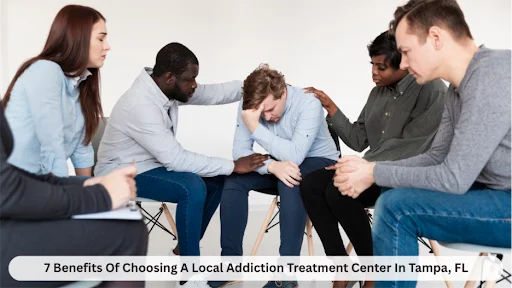
Are you struggling with substance use or mental health issues?
You are only one among many. Billions of people battle with these problems globally. As a victim, you must decide Addiction Treatment Center whether to stay where you are or find a treatment center miles away.
Although leaving your city or town gives you a breath of fresh air, the unfamiliarity can impact your social life and relationships. For that reason, many people choose addiction treatment facilities near their homes.
A local treatment center in Tampa, FL, adds comfort and familiarity to the equation. You can receive high-quality clinical care without feeling overwhelmed in a new city. This article analyzes the features and qualities of local addiction treatment centers, making them the best options.
1. A Support System Around You

As with a local addiction treatment center in Tampa, FL, you never leave your support system behind. In other words, you can effortlessly connect to friends or relatives who keep you in check. Therefore, you will never feel isolated as those you love are part of the process.
Many top-quality local centers leverage advanced family therapy and inclusive healing. They make it easy for your support system to attend sessions and offer the encouragement you need to battle the addiction monster.
2. Fewer Logistics and Less Stress
The early stages of addiction recovery focus on reducing cortisol levels and external pressure. People who choose facilities far from home introduce multiple logistical stresses. They end up anxious, delaying the recovery process because of the distractions that drain their mental energy.
Addicts who stay in the Tampa area remove the unwanted hurdles, creating a smoother on-ramp experience. Eliminating external noise ensures you can focus on therapeutic processes and personal growth.
3. Sunshine State Environment to Optimize Healing
In addition to quality programs, healing from addiction requires a serene environment. Local addiction treatments in the Tampa Bay area allow the victim to leverage the healing power of the sunshine.
You can make the most of the Gulf Coast’s warm climate and the serene Pinellas County’s coastal atmosphere. These thrilling atmospheres offer a calming backdrop that eases your mind and lowers your heart rate. The home-court advantage ensures your nervous system never overworks to adjust to the changing culture or climate.
4. Continuous Care via Telehealth

Many addicts struggle to transition from normal life to a high-support residential environment. The best thing about local centers in Tampa is their integration of local telehealth services with out-of-state programs.
These programs tether you to quality care, ensuring you maintain quality therapeutic relationships and progress despite being away from home. The providers are in the Tampa Bay area and are familiar with community challenges, local resources, and support groups. Consequently, all virtual sessions are robust, with therapists offering localized relapse prevention plans.
5. Immediate Access to Quality Care
The window of willingness is a courageous, fleeting moment when addicts decide to seek health. Because they have the willpower, they can capitalize on the momentum to recover fast. As with local addiction treatment centers, logistics are fewer, and access to services is almost instant.
You can book a space in your favorite treatment center to access near-immediate treatment. The instant response to your needs can motivate the healing process. Local facilities eliminate the distance barrier, ensuring you can begin your journey to healing the same day. The accessibility offers a sense of security, giving you the assurance of receiving care and attention when needed.
6. Access to Local Experts
Local addiction centers have trained clinicians who understand the local clients. These experts have deep knowledge of the environmental and cultural stressors. They understand social pressures and the local job market in Pinellas and Hillsborough counties. Because they know the neighbourhood triggers that can affect your sobriety, they can offer more tailored solutions.
Additionally, most local experts can speak your language, ensuring they personalize the program to your liking. When you work with a professional from your community, you can get superior therapy sessions. You can partner with a skilled clinical team with massive support networks and local resources. Personalized care guarantees better experiences.
7. You Can Build a Reliable Local Recovery Network

One exciting thing about a local rehabilitation facility is that, because of the local recovery network, you can build. Because you are in the same facility with people from your local home, you can continue with the friendship even after graduating from the facility. They can be your support system to navigate home life without a bustle. A local center connects individuals from your home area who can be your squad to be sober Addiction Treatment Center.
These built-in networks offer a safety net during vulnerable moments after the treatment. The transition into a sober lifestyle becomes easier and fun because you have a reliable team around you. Additionally, the localized connection transforms the experience into a sustainable lifestyle.
Wrapping Up
Many benefits are available with the best local treatment center in the Tampa Bay area. These benefits go beyond the geographical convenience. You can start your journey to sobriety with a reliable team of people from your community.
A local center is within your community, which eliminates the stress of traveling and moving away from home. The local placement ensures you can optimize your mental energy and achieve your sobriety goals. Because of the local availability, you can find purpose and stability within the world you live in. You have access to quality tools and relationships.
Hungry for more? We went deeper on this topic right here at Awareness Ideas.

As we age or navigate various life challenges, maintaining independence can become increasingly difficult. This is where live-in care proves to be a vital resource, offering support while allowing individuals to continue living in the comfort and familiarity of their own homes. This personalised care service ensures that a person’s day-to-day needs are met, without the necessity of moving to an unfamiliar environment like a care home. Yet, what exactly does live-in care involve, and how does it promote independent living? This article will delve into the significant role that live-in care plays in supporting an individual’s autonomy and quality of life.
What is Live-in Care?
Live-in care is a service where a professional caregiver resides in the individual’s home to provide round-the-clock assistance. This care model is ideal for those who require ongoing support but wish to remain in their own homes, be it due to ageing, a disability, or a chronic illness. The caregiver’s duties often include personal care, household tasks, and companionship, which are critical components in helping individuals manage their daily lives.
Benefits of Live-in Care Over Residential Care
The choice between live-in care and residential care often hinges on the desire for personal freedom and familiarity. Live-in care offers several advantages over traditional residential settings such as nursing homes. Notably, it allows individuals to maintain their normal routines and lifestyle preferences, guarding the familiarity of their own environment. Additionally, the one-on-one support provided by live-in caregivers ensures personalised attention, fostering a sense of emotional stability and companionship, crucial for mental well-being.
Enhancing Autonomy and Independence
Live-in care uniquely supports independence by providing the precise level of assistance needed. This flexibility empowers individuals to make their own choices about their daily activities, promoting dignity and self-esteem. Care plans are tailored to individual needs, allowing the person to engage in hobbies, social activities, and community involvement that they might otherwise forego. By accommodating individual preferences and rhythms, live-in care’s encourages a more fulfilling lifestyle.
Importance of Personalised Care
Personalised care’s is a cornerstone of the live-in care’s model, ensuring that the assistance provided is fit for purpose and person-centric. Through tailored care’s plans, live-in carers develop a deep understanding of the individual’s unique needs, preferences, and quirks. This intimate knowledge allows caregivers to provide support that is respectful and responsive, enhancing the individual’s quality of life. The specific focus on one-on-one care helps to significantly improve health outcomes and life satisfaction.
The Emotional and Social Impact of Live-in Care
Aside from physical support, live-in care has profound emotional and social benefits. Loneliness and isolation are common concerns for those living alone, especially as mobility and health decline. Regular interaction with a live-in caregiver can provide essential companionship and social interaction, reducing feelings of isolation significantly. Additionally, caregivers can facilitate social engagements and outings, keeping individuals actively involved in community and family life.

SSO CISD Login: Streamlining Access for Students, Parents, and Teachers

Billy Bernthal: The Quiet Life of Jon Bernthal’s Son Away from the Camera

ConroeISD SSO: Your All-Access Digital Pass to Streamlined Learning

The Cultural Impact of the Kentucky Derby Around the World

The best solar generator for RV life in 2026
-

 General6 months ago
Felixing: A Philosophy of Turning Simple Ideas into Wonders
-

 Health6 months ago
Lufanest: Effective Local Anesthesia with Fewer Risks
-

 Entertainment5 months ago
هنتاوي.com: Your Gateway to Arabic Anime Content
-

 General7 months ago
bardoek: The Artistic Heritage Inspiring Modern Creative Trends
-

 General6 months ago
Discover Anonib AZN: An Anonymous Asian Forum
-

 Fashion7 months ago
fashionisk .com – Your Ultimate Guide to Trendy, Smart Fashion
-

 General6 months ago
Euroyungs com Explained: Multi-Niche Hub or Risky Site?
-

 Lifestyle7 months ago
Mariano Iduba: A Visionary Leader in Global Digital Growth