Kitchen Cleaning & Maintenance
Kitchen Countertop Getting Too Stained: Fix It by Material

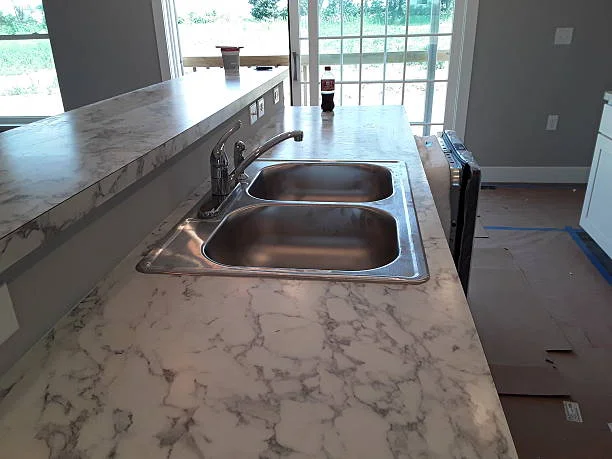
A kitchen countertop getting too stained is a common problem — and most stains respond to targeted methods based on the surface type. The wrong cleaner can etch, dull, or permanently damage the surface. This guide covers what works, what to avoid, and how to stop stains before they set.
Quick Reference: Countertop Stain Removal at a Glance
| Field | Detail |
| Task | Remove stains from kitchen countertops |
| Category | Kitchen Cleaning & Maintenance |
| Difficulty | Beginner to Intermediate (depends on material) |
| Time Required | 5–30 mins per stain; poultice method: 24–48 hours |
| Frequency | Treat stains immediately; deep clean monthly |
| Products Needed | Dish soap, baking soda, hydrogen peroxide (3%), stone-safe cleaner |
| ⚠ Chemical Safety | Never mix bleach + vinegar or bleach + ammonia — toxic gas produced. Wear gloves. Ventilate. |
| Cost (DIY approx.) | $2–$20 for cleaning supplies (estimate, April 2026). Pro stone restoration: $200–$2,500 (Angi, 2026) |
Why Countertops Stain — and What That Means for Cleaning
Different countertop materials absorb and resist stains in different ways. Knowing your surface type is the first step toward fixing the problem without causing damage.
Porous surfaces like marble, granite, and butcher block allow liquids to penetrate if unsealed. Non-porous surfaces like quartz and laminate keep stains on the surface — making them easier to remove.
Acting fast matters on every material. According to This Old House, stains that penetrate porous stone quickly can require a 24–48 hour poultice treatment to draw them out.
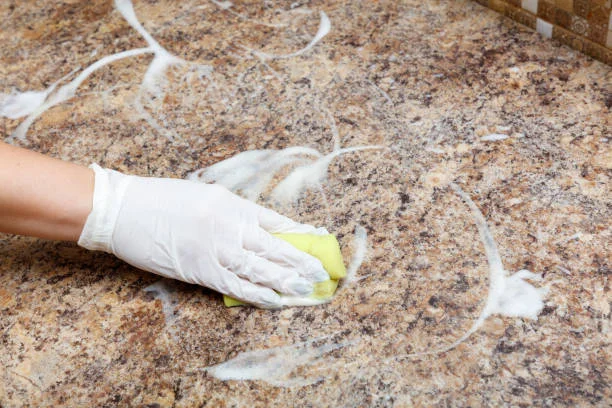
Image Source: https://media.istockphoto.com/id/2195210196/photo/a-person-is-cleaning-a-countertop-with-a-yellow-sponge.jpg?s=612×612&w=0&k=20&c=WNGJ6WFfaEAA5vQXtTU_0xptQcYdNzf8x52R_L8wQLw=
Step-by-Step: Stain Removal by Countertop Material
Granite
First, wipe the area with warm water and mild dish soap using a soft cloth. For oil stains, apply a baking soda-and-water paste directly to the mark. Cover with plastic wrap. Leave for 24–48 hours. Then rinse with warm water and dry with a soft towel.
For wine or coffee, use a paste of baking soda and hydrogen peroxide (3%). Apply the same way. Avoid abrasive scrubbers — they strip the protective sealant.
Do not use bleach, vinegar, or ammonia on granite. These degrade the stone’s sealer and can leave a dull film, according to stone care specialists and manufacturer guidance.
Quartz
For grease stains, use equal parts dish soap and warm water with a sponge. For stubborn spots, Angi home expert Mallory Micetich recommends a baking soda-and-water paste. Spread on the stain, cover with plastic wrap, and leave for up to 24 hours.
Quartz is non-porous and does not need sealing. However, avoid harsh chemicals. Bleach and strong alkaline cleaners can dull the resin binders in engineered quartz over time.
Do not use acetone-based products. Acetone can melt the surface coating on quartz and laminate.
Marble
Marble is porous and etches easily. Blot spills — never wipe. Wiping spreads the liquid further into the stone.
For wine or coffee on marble, use a baking soda and hydrogen peroxide poultice. Cover with plastic wrap overnight. For acidic marks (citrus, vinegar), use a baking soda and water paste only. Avoid vinegar-based cleaners entirely on marble — they etch the surface permanently.
Marble should be resealed annually. A dull ring or discolouration that does not respond to cleaning is etching, not staining — it requires professional resurfacing.
Laminate
For most stains on laminate, a soft sponge with mild dish soap and water removes the mark. For stubborn stains, apply a paste of baking soda and water. Leave 10–15 minutes. Scrub gently with a non-abrasive cloth.
According to Family Handyman, mixing equal parts water and vinegar also works for laminate stains. Rinse thoroughly. Never use steel wool or abrasive scouring pads — they scratch the surface permanently.
Burn marks on laminate are not removable by cleaning. They require section replacement or a laminate repair paste for minor damage.
Butcher Block (Wood)
For light stains, dish soap and warm water are enough. For tougher marks, sprinkle table salt over the stain. Rub with a halved lemon in circular motions until the stain lifts. Rinse with clean water. Dry thoroughly — wood counters must not stay wet.
For dark stains that have set, a light sand with 120-grit sandpaper followed by mineral oil is effective. Sand along the grain only. Reapply food-grade mineral oil afterward.
Butcher block needs oiling every 1–3 months to resist staining. A dry surface absorbs stains rapidly.
Stainless Steel
Use dish soap, warm water, and a microfiber cloth. Always wipe in the direction of the grain. Against-the-grain wiping leaves visible scratches.
For stubborn spots, use a paste of cream of tartar and water. Avoid abrasive cleaners and steel wool. Both scratch the surface and remove the passive layer that protects against rust.
Do not use bleach on stainless steel. Bleach causes pitting and rust over repeated use.
| PRO TIP — The Stain Removal Method Most People Get Wrong: Baking soda is a mild abrasive. On stainless steel, it leaves fine scratches. Use cream of tartar instead — same lifting power, no scratching risk.For all porous stone surfaces, the poultice method works because it draws the stain out of the pores. Simply wiping the surface only removes what has not yet penetrated.Always test any new cleaner on a hidden section of the countertop first. Even stone-safe products can react differently on different finish types. |
Cleaning Frequency and Maintenance Schedule
Daily: Wipe down after cooking. Use a damp microfiber cloth with a drop of dish soap. Rinse and dry.
Weekly: Clean the full surface with a material-appropriate cleaner. Check for any fresh stains or discolouration.
Monthly: Deep clean. Check sealant on natural stone using the water-drop test — if water soaks in rather than beading, it is time to reseal.
Annually: Reseal granite and marble. Oil butcher block every 1–3 months. Reseal quartzite every 6–12 months.
What Not to Use — Material Damage Hazards
| Cleaner/Product | Surface at Risk | Damage Caused |
| Bleach | Stainless steel, granite sealant | Pitting, rust, sealant stripping |
| Vinegar / acidic cleaners | Marble, granite, quartzite | Etching, dull spots, permanent surface damage |
| Abrasive pads / steel wool | Quartz, laminate, stainless steel | Scratches, finish removal |
| Acetone | Laminate, quartz | Surface melting, discolouration |
| WD-40 near rubber seals | Undermount seal areas | Rubber degradation over time |
| Ammonia-based cleaners | Granite, marble | Sealant degradation, film residue |
| METHODOLOGY NOTE: Stain removal advice in this article applies to standard residential countertop finishes: polished and honed natural stone (granite, marble, quartzite), engineered quartz, plastic laminate (Formica-type), solid wood/butcher block, and brushed stainless steel.Methods for unsealed stone, antique finishes, or specialty coatings may differ. Always check your manufacturer’s care guide. Costs sourced from HomeAdvisor and Angi (March–April 2026). Regional pricing varies. |
Chemical Safety and Hazard Warnings
| ⚠ CHEMICAL SAFETY WARNING — MIXING HAZARDS: BLEACH + VINEGAR = Chlorine gas. Washington State Dept. of Health and the CDC confirm this reaction releases chlorine gas, which is toxic even at low concentrations.BLEACH + AMMONIA = Chloramine gas. Do not use ammonia-based glass cleaners after bleach-based disinfectants on the same surface.BLEACH + HYDROGEN PEROXIDE = Increased oxidising reaction. Do not combine.HYDROGEN PEROXIDE + VINEGAR (sequential on same surface) = Peracetic acid. Apply one, rinse completely, then the other if needed.DRAIN CLEANER (acid or alkali) + opposite pH product = Violent reaction. Never use drain cleaners on countertop surfaces.Source: Washington State Department of Health — Dangers of Mixing Bleach with Cleaners | CDC Cleaning and Disinfecting with Bleach guidance. |
| ⚠ MATERIAL DAMAGE — QUICK REFERENCE: Bleach on stainless steel: causes pitting and rust.Abrasive cleaners on natural stone: causes scratching and sealant removal.Vinegar on marble, granite, or quartzite: causes permanent etching and dulling.Acetone on laminate or quartz: causes surface melting.Always read the full product label before use. Work with ventilation open. |
Pro Tips and Common Mistakes
1. The most costly mistake: using the wrong cleaner on natural stone. One vinegar spray on marble creates etching that requires professional resurfacing costing $200–$700 (Angi, 2026). Always check the material before reaching for a cleaner.
2. Blot, do not wipe. On marble and porous surfaces, wiping spreads the spill deeper into the stone. Blot with a dry cloth first, then clean from the outside of the stain inward.
3. Rinse thoroughly after any cleaning product. Even stone-safe products leave residue if not rinsed. Residue builds up and attracts more dirt.
4. The water-drop sealant test: pour a tablespoon of water on a dry granite or marble surface. If it beads, the sealant is intact. If it soaks in within 5 minutes, reseal immediately.
5. For set-in oil stains on porous stone: cornstarch or talcum powder can help draw out fresh oil before you apply the baking soda poultice. Leave the powder for 1–2 hours, then sweep off and apply the poultice.
Common Problems and Solutions
| Problem | Symptoms/Signs | Likely Cause | DIY Fix | When to Call a Pro |
| Set-in oil stain on granite | Dark shadow on surface | Unsealed stone, spill not wiped promptly | Baking soda + water poultice 24–48 hrs | If stain remains after two treatments |
| Etching on marble | Dull, flat ring or mark | Acidic cleaner (vinegar, citrus) or spill | Light etching: marble polishing powder (Etch Remover) | Deep etching requires professional re-polishing |
| Bleach mark on stainless steel | Pitting, rust spot | Bleach or chloride cleaner contact | Light rust: Bar Keepers Friend paste, rinse well | Pitting damage is permanent — consult fabricator |
| White haze on quartz | Milky film on surface | Hard water deposits or soap residue build-up | Diluted isopropyl alcohol (50/50) on cloth, wipe and rinse | If haze returns quickly — may be seam or surface issue |
| Dark stain on butcher block | Brown/black spot, may be raised | Mould or set-in moisture from lack of oiling | Sand lightly along grain, apply food-grade mineral oil. Wear gloves. | If mould covers more than 5 sq ft — specialist required (EPA mould guideline) |
| Laminate burn mark | Brown/black discolouration, texture change | Hot pot or pan placed directly on surface | Minor: toothpaste or baking soda mild abrasive. Major: laminate patch kit. | Structural burn: section replacement needed |
Budget and Cost Breakdown
All costs are estimates. Sources: HomeAdvisor, Angi (March–April 2026). Regional pricing varies — verify locally before purchasing.
| Item / Service | DIY Cost | Professional Cost | Notes |
| Cleaning supplies (baking soda, dish soap, hydrogen peroxide) | $2–$15 | N/A | Widely available; sufficient for most stain types |
| Stone-safe cleaner (e.g. StoneTech, Method) | $10–$25 | N/A | Recommended for daily granite/marble care |
| Countertop sealant (stone) | $10–$40 per bottle | N/A | DIY annual resealing; one bottle covers average kitchen |
| Professional stone cleaning | — | $0.50–$1.50 per sq ft | HomeAdvisor, 2025 data |
| Professional resealing | — | $200–$700 per area | Angi, 2026 data |
| Stone restoration / polish | — | $200–$2,500 | Angi, 2026 — depends on area, stone type, damage severity |
| Countertop repair (chip, crack, stain) | — | $100–$1,200 | Angi cost guide, 2026 |
| Laminate repair kit | $8–$25 | — | For minor burns and scratches |
| TOTAL (DIY cleaning) | $20–$80 for full kit | — | Annual estimate for average kitchen |
Stain Removal Methods Compared
| Method | Approx. Cost | Best For | Effectiveness | Time | ⚠ Hazard/Note |
| Dish soap + warm water | $0 (household) | All surfaces, fresh spills | High for surface stains | 5 mins | None — safe on all materials |
| Baking soda paste | $1–$2 | Stone, quartz, laminate (light abrasion) | High for oil and set stains | 15 mins–48 hrs | Avoid on stainless steel (scratches) |
| Hydrogen peroxide (3%) | $2–$4 | Organic stains on stone and laminate | High for wine/coffee | Overnight | Do NOT mix with vinegar on same surface |
| Vinegar + water solution | $1 | Laminate and quartz ONLY | Medium for water spots | 10 mins | NEVER use on marble, granite, quartzite — etching |
| Commercial stone cleaner | $10–$25 | Natural stone daily maintenance | High | 5 mins | Check label — some contain acids; avoid on marble |
| Professional restoration | $200–$2,500 | Deep stains, etching, surface damage | Highest | Half–full day | Required for etching; not a DIY fix |
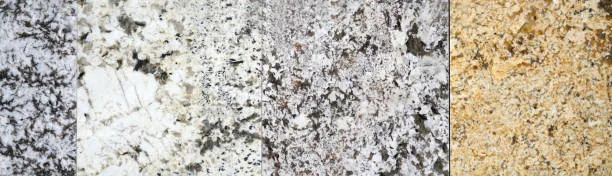
Image source: https://media.istockphoto.com/id/2155972345/photo/granite-floor-tile-samples-for-sale-in-store.jpg?s=612×612&w=0&k=20&c=NtDGR4tJmCanpWkdF1I5pz5c733if_jZxXrS0V_Zrvw=
Frequently Asked Questions
1. Why does my kitchen countertop keep staining even after I clean it?
Repeated staining usually means the sealant has worn away. Natural stone countertops need resealing every 12 months. Do the water-drop test: if water absorbs within a few minutes, the seal is gone. Reapply a stone-specific sealant and the problem should resolve.
2. Is it safe to use bleach on kitchen countertops?
Bleach diluted with water is safe for disinfecting non-porous surfaces like sealed laminate. However, bleach on stainless steel causes pitting and rust. On granite and marble, it strips the sealant. The CDC recommends good ventilation and gloves whenever using bleach indoors. Never mix bleach with vinegar, ammonia, or hydrogen peroxide — toxic gases result. Source: CDC, Cleaning and Disinfecting with Bleach.
3. How do I remove a red wine stain from marble?
Make a poultice from baking soda and hydrogen peroxide (3%) — thick paste consistency. Apply to the stain, cover with plastic wrap, tape the edges, and leave for 12–24 hours. Remove the paste, rinse with warm water, and dry. Do not use vinegar or lemon juice — they permanently etch marble.
4. How much does professional countertop stain removal cost?
Professional stone cleaning typically costs $0.50–$1.50 per square foot, according to HomeAdvisor (2025 data). Full restoration including polishing and resealing ranges from $200–$2,500 depending on the area size, stone type, and extent of damage (Angi, 2026). Costs vary regionally — get at least two local quotes.
5. Can I use vinegar to clean my granite countertop?
No. Vinegar is acidic and will degrade the granite sealant over time. On marble and quartzite, vinegar causes permanent etching. Use a pH-neutral, stone-safe cleaner instead. For everyday cleaning, a few drops of mild dish soap in warm water is the safest option.
6. What is the baking soda poultice method and does it work?
A poultice is a thick paste applied to a stain, covered, and left to draw the staining substance out of porous material as it dries. This Old House confirms the poultice method is effective for oil, wine, and coffee stains on natural stone. The paste must stay moist under plastic wrap while it works — this is why covering it is essential.
Browse our Kitchen Remodeling category covering professional installation standards, 2026 cost milestones, and expert-verified renovation blueprints.
Disclaimer: Advice in this article is based on published guidelines from industry authorities, manufacturer specifications, and Tier 1 sources as cited. Costs vary by region — all figures are estimates sourced at the dates stated and should be verified locally before purchasing. Safety information is sourced from recognised authorities but does not constitute professional trade advice.
For countertop surfaces with significant etching, structural damage, or persistent staining, consult a licensed stone restoration professional. This article is for informational purposes only. Always read product labels in full before use and work in a well-ventilated space.



Cambrotv: Secure Downloads for Live Streams & Private Shows

Erpoz: Mastering Adaptive Strategy and Intelligent Growth

Fashionisk .com Explained: A Closer Look Before You Click

What Is Trupeek Com? The Truth Behind the Platform

What Is Sifangds? An Honest Look at Every Claim
-

 General6 days ago
What Is Felixing? The Truth Behind a Junk Keyword
-

 Health7 months ago
Lufanest: Effective Local Anesthesia with Fewer Risks
-

 Entertainment2 weeks ago
هنتاوي.com: Your Gateway to Arabic Anime Content
-

 General8 months ago
bardoek: The Artistic Heritage Inspiring Modern Creative Trends
-

 General7 months ago
Discover Anonib AZN: An Anonymous Asian Forum
-
 Fashion10 hours ago
Fashionisk .com Explained: A Closer Look Before You Click
-

 General4 days ago
What Is Euroyungs Com? What I Found After Digging In
-

 Lifestyle8 months ago
Mariano Iduba: A Visionary Leader in Global Digital Growth