
Home Improvement
Artificial Plants vs Real Plants: Choosing Based on Maintenance Needs


Choosing between artificial and real plants for your home or office decor hinges on various factors, with maintenance needs often taking center stage. A recent survey revealed that approximately 67% of indoor plant enthusiasts consider maintenance effort before making a purchase. Artificial plants are a popular choice for those looking for low-maintenance options.
Whether you lean towards the lush, oxygen-producing benefits of real plants or the convenience of artificial greenery, this discussion offers a comprehensive look at both options. In this article, we break down what each choice entails and provide tips for making an informed decision based on your lifestyle and preferences.
Assessing the Maintenance Needs of Artificial Plants
The simplicity of caring for artificial plants is a major draw. Unlike their living counterparts, these faux flora require minimal effort to maintain their evergreen appearance. For those with a knack for interior design but a busy schedule, artificial plants are a go-to choice.
Dust accumulation is the primary concern when it comes to maintaining artificial plants. Over time, dust can dull the vibrant appearance of the leaves and petals. To tackle this, routine dusting with a microfiber cloth or a blast of compressed air every few weeks is typically all that’s needed to keep them looking fresh.
Aside from dusting, artificial plants occasionally require a deeper clean to remove any built-up grime. A gentle wipe with a damp cloth or a spray with a dilute soap solution will suffice, ensuring they remain a visually appealing part of your decor without demanding much of your time.
Real Plants Maintenance: What to Expect
Maintaining real plants involves a commitment to their growth and wellbeing. This natural choice enhances your space with vibrant energy and the added benefit of improved air quality. However, real plants demand consistent care that ranges from watering to the correct lighting conditions.
A plant’s specific maintenance regimen, such as the frequency of watering and fertilizer application, greatly depends on the species. Factors like humidity, seasonality, and sunlight exposure also come into play. For example, succulents have different needs compared to ferns or flowering plants.
For those new to plant care, it’s advisable to start with hardier species that are forgiving to novice mistakes. Conducting some research or consulting with a local nursery can provide crucial insights into what plants will thrive in your environment and align with your lifestyle. Basic care of houseplants can be a fundamental resource to help evaluate what real plants maintenance entails.
Factors to Consider When Choosing Between Artificial and Real Plants
Your choice between artificial and real plants should be influenced by a combination of aesthetic preference, maintenance capability, and benefits sought. In environments where natural light is scarce, artificial plants offer a touch of nature without the need for sunlight.
Conversely, real plants come with health benefits such as purifying the air and increasing humidity, which can contribute to well-being. One must also consider the long-term cost implications: while artificial plants are a one-time purchase, real plants may incur ongoing expenses for soil, fertilizers, and replacements if they perish.
In determining the best fit for your space, evaluate factors like the time you’re willing to invest in plant care, whether you have pets or children that may be affected by certain plant types, and your commitment to sustainability practices. These will guide you towards making a choice that’s not only visually pleasing but also practical for your day-to-day life.
How Maintenance Needs Influence the Decision: Artificial vs. Real Plants
The maintenance needs of your chosen greenery can significantly affect your satisfaction with the decision. Artificial plants offer a no-fuss solution, perfect for individuals with a hectic lifestyle or lack of a green thumb. They remain a constant decorative element without the need for ongoing attention.
For those who find joy in the ritual of plant care, real plants can be a therapeutic hobby that also enhances living spaces with natural textures and colors. It’s essential to weigh the personal benefits of interacting with live plants, such as the satisfaction of nurturing growth, against the practicality of artificial varieties that require little to no care.
Ultimately, understanding the each plant type’s maintenance requirements allows you to integrate plants into your space in a way that enhances your life, rather than adding to daily chores. Your choice should align with your lifestyle and the value you place on the presence of natural or artificial elements within your personal or professional environments.
In conclusion, whether you opt for the lush vitality of real plants or the everlasting allure of artificial greenery, the decision should be shaped by your maintenance commitment and lifestyle needs. Evaluating both options and considering factors such as time, costs, benefits, and personal enjoyment will ensure that your choice brings the desired effect to your space for years to come.

As the population ages, maintaining independence becomes a high priority for many seniors. In fact, AARP reports that nearly 90% of older adults want to stay in their own homes as they age. Handyman services play a pivotal role in making this desire a reality by addressing the unique challenges that come with home maintenance and aging.
The value of handyman services in supporting independent living for seniors is undeniable. They facilitate a safer, more comfortable home environment while allowing older adults to enjoy the familiar surroundings of their homes for longer. Below, we examine how these services contribute to the autonomy and well-being of the aging population.
Enhancing Senior Independence with Professional Handyman Services
Handyman services can significantly enhance seniors’ independence by tackling tasks that may be physically challenging for them. With the right professional help, seniors can avoid the strain and risk of injury that comes with home repairs and improvements.
Additionally, professional handymen bring expertise in various areas such as plumbing, electrical work, and carpentry. Their ability to address a wide range of home issues ensures that seniors live in a safe and well-maintained environment without the stress of doing repairs themselves or coordinating multiple contractors.
handyman services for seniors Seniors or their loved ones should seek handyman services with a track record of catering to older adults. These services should offer flexible scheduling and a comprehensive assessment of the home to identify potential hazards or areas for improvement that specifically benefit the senior demographic.
Customizing Home Environments for Safety and Accessibility
Customizing a senior’s home for safety and accessibility is essential for promoting independent living. A primary goal of handyman services is to modify living spaces to prevent accidents and facilitate ease of movement.
For example, grab bars in bathrooms, widened doorways for wheelchair access, and improved lighting are just a few alterations that can make a substantial difference. Handymen skilled in senior home modifications can advise on and implement changes that often go unnoticed but are critical for preventing falls and injuries.
To ensure that modifications are thoughtful and effective, seniors and their family members should consult with a professional who specializes in age-related home adaptations. These experts can often provide a comprehensive evaluation of the home and suggest priorities for modifications to fit individual needs and preferences.
Routine Maintenance Tasks Simplified for Aging Adults
Routine maintenance tasks that are often second nature to younger individuals can become cumbersome for seniors. Handyman services alleviate this burden by managing these tasks, ensuring seniors’ homes remain in good repair without putting themselves at risk.
Periodic tasks such as cleaning gutters, checking smoke alarms, and servicing HVAC systems are essential for the functionality and safety of a home. Seniors may overlook these responsibilities due to physical limitations or cognitive changes. Thus, having a trusted handyman to handle these tasks is a vital support system.
When choosing a handyman, it’s beneficial for older adults to establish a regular maintenance schedule. This proactive approach can prevent emergencies and ensure a safe living environment. A home maintenance schedule can help prioritize tasks and ensure nothing is overlooked.
Bridging the Gap: Handyman Services and Senior Quality of Life
Handyman services significantly contribute to a senior’s quality of life beyond mere home maintenance. They provide peace of mind, knowing that their living space is secure and tailored to meet their changing needs.
Such services enable many seniors to live autonomously in their communities, with the confidence that help is available when needed. The emotional benefit of remaining in a familiar home while aging cannot be overstated; it is often linked to increased happiness and a sense of belonging.
Ultimately, investing in a reliable handyman service ensures that seniors experience a higher sense of security and independence, essential components for a fulfilling life. Seniors should assess potential services for their responsiveness, understanding of senior needs, and capability to provide practical solutions that enhance day-to-day living.
Overall, handyman services provide an invaluable bridge to independent living, safety, and comfort for seniors. These services not only help maintain their homes but also preserve their lifestyle, autonomy, and connection to the community, reinforcing the importance of a supportive home environment in the golden years.

Rug padding is one of the most consistently underestimated components of proper rug care. Many homeowners treat it as an optional accessory — something that prevents slipping but adds little else of value Custom Rug Padding. In practice, the right pad does far more than anchor a rug to the floor. It protects the rug’s structure, preserves the floor surface beneath it, improves comfort underfoot, and can meaningfully extend the usable life of a piece that represents a significant investment. Tailor-made rug pad solutions that are matched precisely to the dimensions and requirements of each rug deliver benefits that generic, off-the-shelf alternatives simply cannot replicate.
Understanding what quality rug padding actually does — and what happens when it is absent or inadequate — helps homeowners make a more informed decision about this easily overlooked aspect of rug care. The consequences of getting it wrong are rarely dramatic or immediate, but they accumulate over time in ways that affect both the rug and the floor it sits on.
How Padding Protects the Rug Itself
Every step taken on a rug without adequate padding transmits force directly through the rug’s pile and foundation to the hard floor surface beneath Custom Rug Padding. Over time, this compression and impact stress breaks down the fibres and knots that give a rug its structure and appearance. In hand-knotted rugs, where the pile is anchored by individual knots tied to the foundation warps and wefts, repeated unpadded compression gradually loosens those knots and accelerates the wearing of the pile.
Quality padding creates a cushioned intermediate layer that absorbs and distributes the impact of foot traffic before it reaches the rug. This shock-absorption effect reduces the stress on the rug’s structure with every step, extending the period over which the pile maintains its height, density, and visual quality. For valuable or antique rugs, this protection is particularly significant — the difference between a rug that lasts a generation and one that lasts several generations can be partly attributable to whether it was properly padded throughout its life.
Padding also prevents the micro-movement that occurs when a rug shifts slightly with each step on an unpadded surface. This movement creates friction between the rug’s foundation and the floor, gradually abrading the backing and weakening the structural elements that hold the rug together Custom Rug Padding. A well-fitted pad eliminates this movement entirely, protecting the rug’s underside from the abrasive contact that accelerates deterioration.
Protecting the Floor Beneath
The floor surface beneath a rug is at risk from two distinct threats when adequate padding is not in place. The first is the abrasion caused by the rug’s backing moving against the floor — a problem that is particularly acute with rugs that have textured or rough undersides, and on hardwood or stone floors where surface finishes are vulnerable to scratching.
The second threat is chemical. Some rug backings — particularly the latex backings used in tufted rugs — can react with floor finishes over time, causing discolouration or adhesion that is difficult or impossible to reverse. Quality rug padding creates a barrier between the rug’s backing and the floor surface, preventing both mechanical and chemical damage.
For homeowners with premium hardwood, stone, or tile floors, the cost of repairing or refinishing a damaged floor surface far exceeds the cost of the padding that would have prevented the damage. This protective function alone justifies the investment in quality padding — even before its benefits for the rug itself are considered.
The Case for Custom-Fitted Padding
Generic rug pads are available in standard sizes that rarely correspond precisely to the dimensions of the rugs they are intended to support. A pad that extends beyond the edge of the rug creates a tripping hazard and an unsightly border. A pad that falls significantly short of the rug’s edges leaves the perimeter unsupported — exactly the area where rugs are most vulnerable to curling, slipping, and uneven wear.
Custom-fitted padding eliminates these problems by providing support that matches the rug’s dimensions precisely. The entire surface of the rug is uniformly supported, the edges remain flat and stable, and there is no excess pad visible or accessible at the rug’s perimeter. For irregularly shaped rugs — rounds, ovals, or custom-cut pieces — custom fitting is the only approach that delivers this uniform support.
Material Selection for Different Floors and Rugs
Not all rug padding materials are appropriate for all combinations of rug and floor. Natural fibre pads — typically felt or wool — are well suited to hardwood floors and provide excellent cushioning for hand-knotted rugs. Rubber-based pads offer superior grip on smooth surfaces and are appropriate for many synthetic and machine-made rugs. Combination pads that layer felt and rubber provide both cushioning and grip, and are suitable for a wider range of applications.
Selecting the wrong padding material can cause the same problems that no padding causes — chemical reaction with floor finishes, inadequate grip, or insufficient cushioning for the rug type. The guidance of a specialist who understands how different materials interact is valuable in avoiding these pitfalls and ensuring that the padding chosen genuinely serves both the rug and the floor.
An Investment That Pays for Itself
Quality rug padding is not an expensive addition to the cost of rug ownership — it is an investment that pays for itself through the extended life of the rug and the protection of the floor beneath it Custom Rug Padding. For homeowners who have invested in rugs of any significant value, professional premium rug underlay installation service is one of the simplest and most cost-effective steps available to protect that investment over the long term.
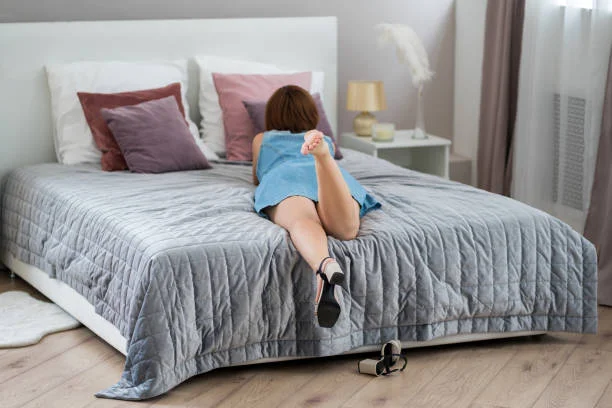
Take a moment to evaluate the layout of a professionally styled bedroom in any architectural digest or interior design portfolio. You will notice a consistent, almost universal pattern: the space at the foot of the bed is never left empty.
Whether it is a pair of vintage leather stools, an antique steamer trunk, or a tailored settee, designers instinctively place something substantial at the end of the mattress. To the untrained eye, this might seem like an excuse to sell an extra piece of furniture or simply fill empty square footage.
In reality, it is a deliberate architectural tactic used to solve a common spatial problem known as “floating bed syndrome.” By anchoring the foot of the bed, you fundamentally alter the geometry, functionality, and psychological comfort of the room.
The Physics of Visual Weight
Interior design relies heavily on the concept of visual weight. A queen or king-sized bed is a massive, horizontal plane that dominates the room. When wrapped in soft, voluminous bedding, it resembles a large, formless cloud.
If this massive shape is pushed against a wall and left bare at the foot, it lacks a definitive boundary. It appears to “float” aimlessly into the center of the room.
Placing a solid object at the end of the mattress provides a visual full stop. It acts as a counterweight to the towering presence of a headboard, establishing a clear parameter for the sleeping zone and giving the eye a place to rest. It grounds the most dominant piece of furniture in the room, making the entire layout feel intentional rather than accidental.
Establishing the “Transition Zone”
A bedroom serves two conflicting purposes: it is a sanctuary for unconscious rest, and it is a high-traffic staging area for getting dressed and preparing for the day. When these two zones bleed into one another, the room feels chaotic.
An anchor piece serves as a physical and behavioral boundary between these zones. It provides a dedicated place to sit while tying your shoes, reviewing emails on your phone, or laying out clothes for the next morning. By confining these active, waking behaviors to the foot of the bed, you preserve the mattress strictly for sleep, which sleep psychologists argue is crucial for maintaining healthy circadian rhythms.
The Clutter Paradox
Beyond spatial geometry, an unanchored bed often falls victim to the reality of daily living.
To make a bed look inviting, we layer it with decorative throw pillows, heavy duvets, and knitted blankets. However, when it is time to actually sleep, those layers become a nuisance. Without a designated landing spot, these items are inevitably tossed onto the floor, a nearby chair, or a treadmill in the corner.
This is where the anchor piece transitions from an aesthetic choice to a functional necessity. While two small ottomans might solve the visual weight problem, they fail the functionality test. This is why many homeowners eventually graduate to a piece of furniture that conceals the chaos. Arustic bedroom storage bench, for example, not only grounds the bed with the heavy, tactile warmth of natural wood, but it actively swallows the clutter, keeping the floor clear and the mind quiet.
Introducing Necessary Friction
Finally, anchoring the bed introduces essential textural friction.
A bedroom is inherently soft. It is filled with cotton sheets, wool rugs, upholstered headboards, and velvet curtains. If a room has too much softness, it begins to feel sterile and overly insulated, lacking depth and character.
Designers use the foot of the bed to inject contrasting materials into the environment. The raw grain of reclaimed timber, the cool touch of a metal latch, or the woven texture of rattan breaks up the monotony of the linens. It brings an element of the outdoors inside, grounding the airy softness of the bedsheets with the heavy, organic reality of nature.
Conclusion
The space at the end of your mattress is not just leftover square footage; it is the strategic center of the room. Leaving it empty is a missed opportunity to establish order. By anchoring the bed with a piece that offers both visual gravity and concealed utility, you transform the bedroom from a room where you simply keep a mattress into a balanced, highly functional sanctuary.

Ellis Segura: Celebrating a Life of Love, Legacy, and Lasting Memories

Paul Werdel: From Storytelling Passion to Leadership in Digital Journalism

Jeroen Dik: Blending Racing Success with Legendary Tuning Mastery

How Integrating Interfax Faxing Software Streamlines Business Communications?

Agency Owners: Key Considerations When Evaluating Erp Vendors
-

 General6 months ago
Felixing: A Philosophy of Turning Simple Ideas into Wonders
-

 Health6 months ago
Lufanest: Effective Local Anesthesia with Fewer Risks
-

 General7 months ago
bardoek: The Artistic Heritage Inspiring Modern Creative Trends
-

 Entertainment5 months ago
هنتاوي.com: Your Gateway to Arabic Anime Content
-

 General5 months ago
Discover Anonib AZN: An Anonymous Asian Forum
-

 Fashion7 months ago
fashionisk .com – Your Ultimate Guide to Trendy, Smart Fashion
-

 Lifestyle7 months ago
Mariano Iduba: A Visionary Leader in Global Digital Growth
-

 Fashion7 months ago
Casîo: Explore Legacy, G-SHOCK Watches, Keyboards, and More