
Health
Cat Stretch: Simple Move For Healthier Back

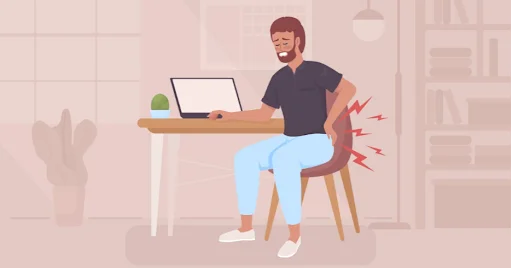
Lower back pain worms its way into everything Cat Stretch.
You can’t tie your shoes. Catching your tippy toes or bumping up for things on high shelves draws that sharp twinge down your back. Even worse, the first thing in the morning becomes a battle to get out of bed, and the contrast is stark.
This is a condition that affects as many as 84 percent of adults. Pills can temporarily dull the pain, but they don’t treat the underlying lower back pain issues permanently. And while physical therapy can help, you need the right exercises that address the problem head on.
One standout therapy that has been found effective against lower back pain is the cat stretch. It’s a subtle, flowing motion that not only prevents but also relieves stiffness where tension builds, without banging or stressing your body with torturous gym exercises.
Here are more details on it.
Back Pain Problems: Why Your Back Hurts More Than You Think
Lower back pain is now part of modern living. Sitting at a desk, scrolling on your phone, driving, or slouching on your couch for hours all put strain on your spine. Over time, muscle tightness, poor posture, and the natural curves of the back become stressed.
While severe or ongoing pain needs medical attention, many everyday aches come from stiffness and lack of movement. If the spine doesn’t move freely, it loses flexibility as circulation decreases, making discomfort more likely.
The good news is that small, consistent movements and exercises, such as the cat stretch, can make a big difference in keeping your back healthy.
The Cat Stretch: A Gentle Reset for Your Spine
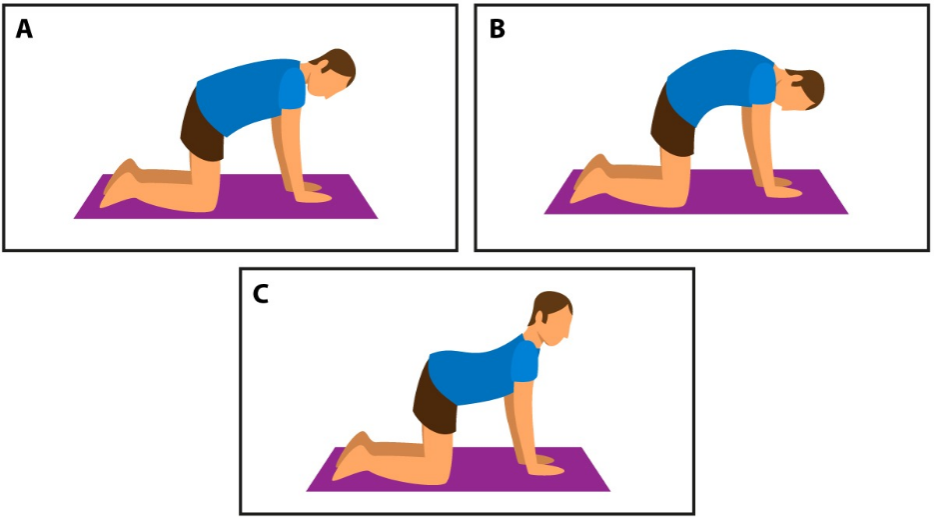
The cat stretch is an easy spinal mobility exercise that helps release tension in your spine. It smoothly flexes the spine to improve posture and circulation.
To do a cat stretch, ensure your wrists are under your shoulders, and your knees are under your hips. Use your core to tuck your chin in towards your chest, while your spine curves up towards the ceiling on exhale. Pause for a moment, then return to a neutral spine.
Repeat this 8-10 times slowly while coordinating the movement with your breath. Done well, the ‘cat stretch’ is good for the back and offers several benefits, such as:
1. Improves Spinal Mobility and Flexibility
Sitting at a desk for hours transforms your back into a solid block of wood. All the joints between your back’s 24 vertebrae cease moving and lock tight. The cat stretch does the opposite, by pushing your spine through its full range of motion, shifting between rounding and arching.
When you round down, space opens up in the front part of each spinal joint in your neck, and also throughout your thoracic and lumbar regions. When you round up, those same sections on the back side of each joint open instead.
This circling-in-opposite-directions action lubricates the joints, similar to how moving a stiff door hinge back and forth loosens it up. You regain the spinal flexibility you had before, making it easier to bend and pick stuff up from the ground without any discomfort.

2. Relieves Back Pain and Stiffness
Sitting down all day creates a cascade of problems. Your muscles tighten, your posture collapses forward, and tension locks into your lower back. It gets even worse if you’re hunched over looking at a computer screen. The Cat Stretch directly addresses each of these issues.
With gentle traction, it lengthens the erector spinae muscles along your spine, the latissimus dorsi in your mid-back, and the lumbar muscles that bear constant strain from poor positioning. As you flow through the movement, the tight muscles gradually release their grip.
For people suffering from minor injuries or chronic back aches, relief comes without the pressure on already tender areas. Consistent cat stretch sessions can deliver lasting results.

3. Helps Strengthen Core Back Muscles
The core isn’t limited to your abs. The muscles that surround the midsection stabilize your spine and are the core muscles. It is the cat stretch that gets them all working. When you round your back, your abdominal muscles contract to help make that curve.
Your obliques are getting fired up to support the sides. The small stabilizing muscles near your spine engage to control the movement and maintain balance. When you arch downward, your back extensors take control and form the reverse curve while your core prevents sagging.
Ultimately, training your muscles in this way will transfer to everyday life, as four different muscle movements are being practiced. With stronger core muscles, better posture comes effortlessly. Your body keeps its natural alignment instead of slouching in the chair.

4. Helps Release Tension from Your Lower Back
Tension doesn’t stay put. It starts in your lower back and crawls upward into your shoulders and neck, sometimes lodging as a headache. The Cat Stretch targets whole-body tension by moving your spine from tailbone to skull.
In the rounded position, your shoulder blades spread apart, stretching the muscles between them where you hold tension. Your neck flexes forward and releases tight spots at the base of your skull, and your shoulders naturally drop away from your ears, where tension silently builds.
The arching portion opens up the front of your chest, rolls back rounded shoulders, and lengthens the front of your neck, counteracting that classic forward-hunched pose you adopt while peering at your computer screen. The oscillation between these positions is more conducive to release rather than holding static stretches.
The Growing Role of Technology in Everyday Back Care
Technology is quietly transforming the way people manage everyday health concerns, including lower back pain. With the rise of fitness app development, individuals now have structured guidance at their fingertips to maintain spinal mobility and prevent stiffness caused by sedentary lifestyles. Instead of relying solely on memory or occasional gym visits, users can follow guided stretching routines, posture correction programs, and mobility sessions directly from their smartphones.
Many modern fitness apps include step-by-step video demonstrations of exercises like the cat stretch, along with breathing cues and progress tracking. Some even integrate wearable devices to monitor daily movement patterns and send reminders when prolonged sitting begins to affect posture. This digital support system encourages consistency, which is essential for long-term back health.
As more people work desk jobs and spend extended hours on screens, technology-driven fitness solutions are becoming a practical companion to simple exercises. When combined with mindful movement, these tools help build sustainable habits that protect the spine and reduce discomfort over time.
Conclusion
The Cat Stretch provides tangible results with minimal effort. Spending just a couple of minutes each day will increase your spine’s flexibility, alleviate chronic back pain, strengthen your core, release tension, and calm your nervous system.
Unlike other exercises, it doesn’t require any special equipment or expensive gym subscriptions. All you need to do is listen to your body and maintain consistency. The best part is that you can make this part of your morning routine or use it as a midday reset. Over time, it becomes a reliable tool for managing discomfort and maintaining a healthy, pain-free back.
Dive into more expert insights and fresh perspectives at Awareness Ideas.


You might be feeling a bit pulled in every direction right now. One child needs a cleaning, another has a chipped tooth from sports, you are overdue for a checkup, and somewhere in the middle of all that you are trying to figure out which type of dentist your family actually needs. It can feel like you are piecing together a puzzle with no picture on the box, but finding a dentist serving Wellston, Ohio can help bring everything into focus.
Because of that tension, you might be wondering if you really need different specialists for every concern, or if one trusted general dentist for your family’s care could handle most of it. You want good care, you want your kids to feel safe, and you need something that fits your time and budget.
Here is the short version. A good general dentist can become your family’s long-term partner for prevention, early treatment, and everyday guidance. Most routine and many advanced needs can be handled in one familiar office, which means fewer surprises, fewer referrals, and a lot less stress. When you do need a specialist, that same dentist can coordinate your care so you are not left on your own to figure things out.
So where does that leave you when you are trying to choose what is best for your household.
Why does choosing a general dentist feel so stressful in the first place
Part of the stress comes from not knowing what you do not know. Maybe you have seen advice that says you need a pediatric dentist for kids, a cosmetic dentist for whitening, and another office for gum problems. On paper that sounds thorough. In real life it can turn into three different waiting rooms, three sets of forms, and three separate bills.
There is also the emotional side. If you had a bad experience at the dentist as a child, you might worry about putting your own kids through anything similar. You want someone patient and kind. You want to avoid shame about “not flossing enough.” You want a place where your whole family is treated like human beings, not time slots.
Then there is the financial piece. Dental care can feel expensive. According to national data from the CDC, tens of millions of adults skip the dentist each year, and cost is a major reason. You can see some of these numbers in the CDC’s dental statistics. When every visit feels like a gamble, it is tempting to put things off until something hurts, which often means more complicated and more costly treatment later.
So if the choices feel confusing and the stakes feel high, that reaction is reasonable. You are not overthinking it. You are trying to protect your family.
How can a general dentist simplify life for your household
Think about what you actually need over the course of a normal year. Checkups. Cleanings. X rays. Maybe a filling or two. Possibly a night guard for clenching, sealants for kids, or help with sensitivity. A well trained family general dentist is set up for exactly this kind of ongoing care.
Here are four grounded reasons many households choose one primary general dentist as their home base.
1. One office for most of your everyday needs
Instead of juggling multiple practices, your general dentist can handle routine care for adults and often for children as well. They are trained to diagnose cavities, gum disease, early bite problems, and even signs of issues like grinding or sleep apnea. When the same dentist sees you regularly, small changes do not get missed as easily.
Imagine your teenager has a small cavity that is caught at a six month checkup. It can be treated quickly and comfortably. Now imagine that same cavity is not caught for two or three years because visits are scattered or delayed. You might be facing a root canal or even an extraction. That is the quiet power of consistent, general care.
2. A relationship that grows with your family
Dental fear is common, especially for kids. A general dentist who sees your family year after year can build trust in a way that one time visits never will. The staff learns your names, your preferences, and what calms you down when you feel tense in the chair.
For a nervous child, this kind of familiarity is priceless. The first visit might just be a ride in the chair and a simple exam. By the second or third visit, the child knows the routine and feels safer. That reduces tears, reduces the need for emergency visits, and sets them up for healthier habits as adults.
3. Focus on prevention, not just “fixing problems”
A strong general dentist is not only there when something breaks. They are there to help prevent issues from starting. The American Dental Association has helpful guidance on how to choose a dentist, and one clear theme is the value of preventive care.
Regular checkups, cleanings, fluoride, and sealants can dramatically reduce the risk of cavities and gum disease over time. The CDC also highlights simple habits like brushing with fluoride toothpaste and limiting sugary drinks as powerful tools for adults in its oral health tips. A general dentist weaves all of this into your care plan. Instead of reacting to emergencies, you are working together to prevent them.
4. Clear guidance on when you really need a specialist
There are times when a specialist is the right call. Complex root canals, advanced gum surgery, or jaw surgery are examples. The question is, how do you know when that time has come.
When you have a trusted general dental provider as your first stop, you do not have to guess. They can explain what is needed in plain language, show you images, and refer you to someone they trust when the situation calls for it. They stay in the loop, which keeps your care coordinated instead of scattered.
What practical differences should you consider when you choose family dental care
It can help to see the tradeoffs more clearly. Here is a simple comparison that many families find useful when deciding how to structure their care.
| Question | Rely mainly on one general dentist | Use separate dentists for each need |
| How many offices do you manage | Usually one main office for most care | Multiple offices for kids, adults, cosmetic, and more |
| Consistency of care | High. One team tracks your full history | Varies. Records and history are spread out |
| Time and scheduling | Family appointments can often be grouped | More separate visits and travel time |
| Cost control over time | More focus on prevention and early treatment | Higher risk of delayed care and urgent visits |
| When a specialist is needed | General dentist explains and coordinates referral | You may have to research and decide on your own |
This is not about choosing “right” or “wrong.” It is about matching your reality. If your family already juggles school, work, and activities, then one central home for your dental care can reduce friction and make it easier to stay on track.
What can you do right now to move toward better dental care for your household
You do not need to overhaul everything at once. A few focused steps can move you from worry to a clearer plan.
1. Decide what matters most to your family
Take five quiet minutes and list what you truly care about in a dentist. Is it gentle care for anxious kids. Evening hours. Clear prices. A small, familiar office. Or a larger practice with many services under one roof.
Once you know your priorities, it becomes easier to see which general dentists align with your values, not just with your insurance list.
2. Use trusted resources to create a short list
Combine personal recommendations with professional guidance. Ask people you trust about their dentist. Pay attention to comments about how staff treat them, how clearly treatment is explained, and whether they feel rushed.
Then compare those options with independent advice from places like the ADA’s guide on choosing a dentist and your insurance directory. Aim for a short list of two or three general dentists you would feel comfortable calling.
3. Treat the first visit as a two way interview
Your first appointment is not a life sentence. You are allowed to pay attention to how you feel in the office. Notice whether the team explains findings in everyday language. See if the dentist asks about your goals and your budget, not just your teeth.
Ask simple questions such as “How do you handle anxious patients” or “What is your approach to prevention for kids and adults.” A good general dentist will welcome those questions. They know you are trying to build a long term relationship, not just get through one appointment.
Bringing it all together for your family’s everyday care
Choosing a general dentist for your household is really about choosing stability. It is about having one trusted place to turn when a tooth aches, when a child chips a tooth, or when you simply want to know you are doing the right things at home.
You do not have to have every answer right now. You only need the next step. Clarify what matters to you, create a short list, and schedule that first visit. Each small move replaces a bit of worry with something steadier. Over time, those simple visits can add up to fewer surprises, healthier smiles, and a lot more peace of mind for you and your family.

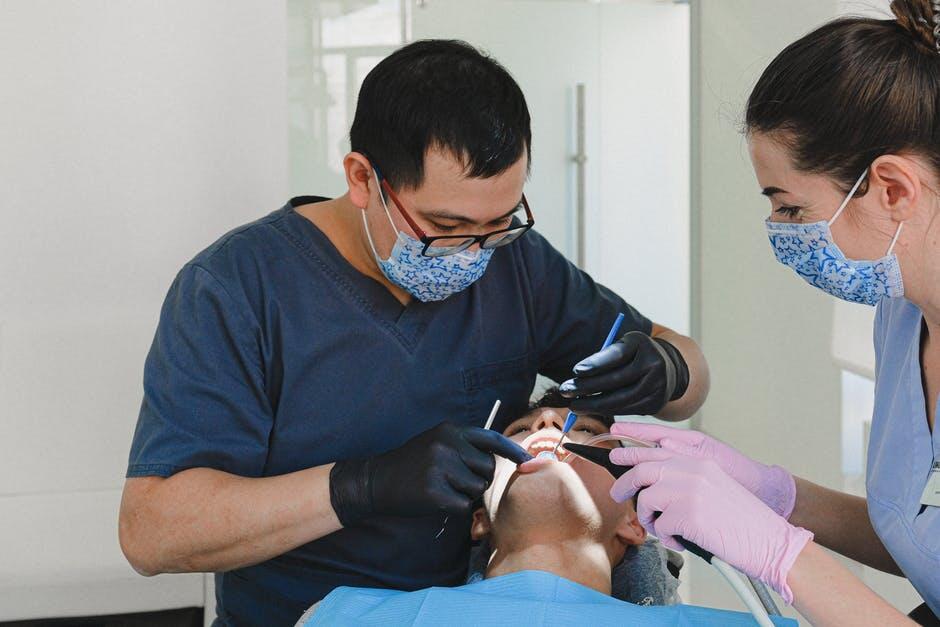
Good oral health plays an important role in overall well-being. Healthy teeth and gums can improve comfort, confidence, and quality of life. While daily brushing and flossing are important, long-term oral wellness also depends on receiving proper dental care.
Choosing a dental provider that offers comprehensive services can help prevent problems and support healthy habits for years to come.
Regular Preventive Care Matters
Preventive care is the foundation of long-term oral wellness. Routine dental visits help identify small problems before they become serious. Regular cleanings remove plaque and tartar that daily brushing may miss.
Dental exams can also detect signs of tooth decay, gum disease, and other oral health concerns. Early treatment often reduces discomfort and lowers treatment costs. A dental practice that focuses on prevention helps patients maintain healthy smiles and avoid unnecessary complications.
Education is another important part of preventive care. Patients should receive guidance on brushing, flossing, and making choices that support good oral health.
A Wide Range of Dental Services
Comprehensive care means having access to different types of dental treatments in one place. This can include preventive care, restorative treatments, cosmetic services, and emergency care.
When a dental office offers a broad range of services, patients can receive consistent care throughout different stages of life. This approach creates a better understanding of each patient’s dental history and needs.
Many people look for a trusted dentist in Antioch, TN who can provide both routine care and more advanced treatments when necessary. Having access to multiple services under one provider can make dental care more convenient and effective.
Personalized Treatment Plans
Every patient has unique dental needs. A good dental provider takes the time to understand each person’s health history, concerns, and goals. Personalized treatment plans help ensure that care is tailored to the individual rather than using a one-size-fits-all approach.
For example, some patients may need additional support for gum health, while others may focus on restoring damaged teeth. Customized care allows dental professionals to address specific concerns and create realistic plans for maintaining oral wellness.
Patients should feel comfortable asking questions and discussing treatment options. Open communication helps build trust and leads to better outcomes.
Modern Technology and Patient Comfort
Technology can improve both diagnosis and treatment. Modern dental equipment often allows providers to detect issues earlier and perform procedures more efficiently.
Digital imaging, advanced diagnostic tools, and updated treatment methods can support more accurate care. These tools may also improve patient comfort and reduce treatment times.
A welcoming environment is also important. Patients are more likely to attend regular appointments when they feel comfortable and respected. Friendly staff and clear communication can make a positive difference in the overall dental experience.
Long-Term Support and Follow-Up Care
Oral wellness requires ongoing attention. A quality dental provider offers continued support beyond individual appointments. Follow-up visits help monitor progress and ensure treatments are working as expected.
Long-term care also includes tracking changes in oral health over time. Regular evaluations help identify new concerns before they become serious problems. Consistent care can support healthy teeth and gums throughout every stage of life.
Providers who focus on long-term relationships often help patients stay motivated and committed to good oral health habits.
Learn All About Long-Term Oral Wellness
Comprehensive dental care involves more than treating problems when they occur. It includes preventive services, personalized treatment plans, modern technology, and ongoing support.
Choosing a provider that offers complete care can help protect oral health for many years. With the right approach, patients can enjoy healthier smiles, greater comfort, and better overall well-being throughout their lives.

Modern medicine is always finding new ways to help people. One treatment that has gained attention is ketamine therapy. Ketamine was first used as a medicine to help people during surgery. Today, doctors are also studying other ways it may help patients.
Ketamine therapy is given under medical care. It is used in safe and controlled settings. Doctors and healthcare teams watch patients closely during treatment. Continue reading to discover everything you need to know.
Understanding Ketamine Therapy
Ketamine was first made to be used as an anesthetic. Doctors have used it for many years during surgeries and other medical procedures. It helps reduce pain and can make patients feel calm. It is still used for these purposes today.
Ketamine and Mental Health Care
One area where ketamine is being studied is mental health care. Some people do not get enough help from common treatments. In these cases, doctors may look at other options. Ketamine therapy is one treatment that may be considered.
Before treatment begins, doctors review a patient’s health history. They also look at the person’s needs and symptoms. This helps them decide if ketamine therapy is a good choice. Careful planning helps keep patients safe.
Supporting Patients With Difficult Conditions
Some health problems can be hard to treat. People may try many treatments without getting the results they want. Doctors may then consider other options. Ketamine therapy may be one part of a larger care plan.
Every person is different. A treatment that helps one person may not help another. Because of this, healthcare providers watch patients closely. They can make changes to the treatment plan if needed.
Pain Management Applications
Ketamine is also used to help manage certain types of pain. Long-term pain can make daily life harder. It can affect work, sleep, and everyday activities. Finding effective ways to manage pain is important. Quantum Healing Integral Arts offers information and support for those exploring different treatment options.
Doctors follow careful guidelines when using ketamine for pain care. Their goal is to help patients while keeping treatment safe. Each person’s needs are different. Treatment decisions are made with care and professional judgment.
How Ketamine Therapy Is Given
Ketamine therapy can be given in different ways. Some people receive it through an IV. Others may receive it using other approved methods. The method used depends on the person’s treatment plan.
Medical supervision is very important. Healthcare providers watch patients during and after treatment. They check how the patient responds and look for any concerns. This helps support safety and comfort.
Possible Benefits of Ketamine Therapy
Researchers continue to study the benefits of ketamine therapy. Some people may notice changes sooner than with some other treatments. This has increased interest in ketamine therapy. Still, results can be different for each person.
The Importance of Professional Guidance
Ketamine therapy should always be managed by trained healthcare professionals. They can decide if the treatment is right for a patient. They also help reduce risks and monitor progress. Patient safety is always a top concern.
Looking Ahead in Modern Medicine
Ketamine therapy continues to be an important topic in healthcare. Doctors use it for anesthesia, pain management, and some mental health treatments. Researchers are still learning more about how it works. New studies may lead to more uses in the future.
As research continues, ketamine therapy may help more patients. Careful study and medical supervision remain important. Healthcare providers will continue to explore its benefits and risks. This work may help improve treatment options for many people.
If you’d like to learn more, check out more articles on our blog.

4 Reasons To Choose A General Dentist For Your Household’s Care

What to Look for in Comprehensive Care for Long-Term Oral Wellness

Medical Uses of Ketamine Therapy in Modern Medicine

The Importance Of Transitional Care From Baby Teeth To Permanent Smiles

Otelia Cox: Inside the Private Life and Enduring Love Story of a Hollywood Cornerstone
-

 General2 months ago
What Is Felixing? The Truth Behind a Junk Keyword
-

 Health9 months ago
Lufanest: Effective Local Anesthesia with Fewer Risks
-

 Entertainment2 months ago
هنتاوي.com: Your Gateway to Arabic Anime Content
-

 General10 months ago
bardoek: The Artistic Heritage Inspiring Modern Creative Trends
-

 General9 months ago
Discover Anonib AZN: An Anonymous Asian Forum
-

 Fashion2 months ago
Fashionisk .com Explained: A Closer Look Before You Click
-

 Technology10 months ago
Aponeyrvsh: A Modern Framework for Innovation and Resource Use
-

 Lifestyle10 months ago
Mariano Iduba: A Visionary Leader in Global Digital Growth